
About
Sculpture as a language
I am a sculptor and maker working with weaving, knotting, crochet and lost-wax casting to explore how the language of making can hold stories, memories and histories.
My work begins with the hand. Through repeated gestures and processes, materials are manipulated, transformed and given new meaning. Weaving and knotting create structures that can be translated into wax and ultimately preserved in bronze, allowing something of the original gesture to remain within the finished sculpture.
I am interested in what these processes can communicate beyond the object itself — the knowledge held in the hand, the labour embedded in making, and the traces of people, places and histories that can be carried through material.
For me, sculpture is both a physical and cultural language: something made, inherited, remembered and continually reinterpreted.
A language inherited
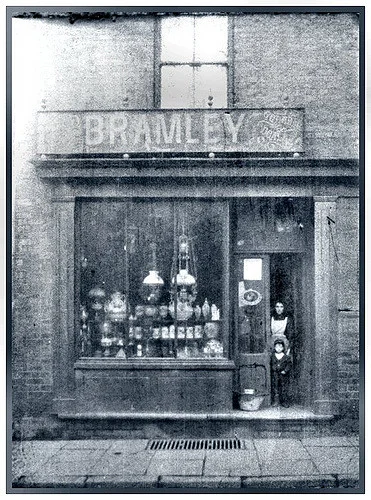
My relationship with weaving is rooted in the history of the East Midlands, a region shaped by generations of textile workers, makers and manufacturers.
My own family history is part of this story. For around 350 years, weaving, knitting and making have formed part of my family's connection to the region. This gives the gestures I use in my studio today a personal connection to the hands and skills of earlier generations.
I am interested in what is carried through these processes. Not simply the finished object, but the knowledge of how to make it — the rhythm of repetition, the tension of a thread, the structure of a knot, the movement of the hands.
These gestures can be both practical and expressive. They connect the present to the past, while allowing an inherited language to be transformed into something new.
Practice & collaboration
Alongside my studio practice, I work with organisations, museums, charities and communities to develop sculpture and public art projects rooted in place and history.
Over almost two decades of professional practice, I have worked on projects ranging from historic landscapes and houses to public artworks and research-led commissions. My work has taken me across the Midlands and beyond, working with academics, heritage organisations, artists, communities and other specialists.
I enjoy working across both the creative and practical sides of a project — from developing an initial idea and engaging audiences, through to research, fundraising, fabrication and installation.
Collaboration is an extension of my studio practice: another way of bringing knowledge, stories and making together.

The Garden Studio
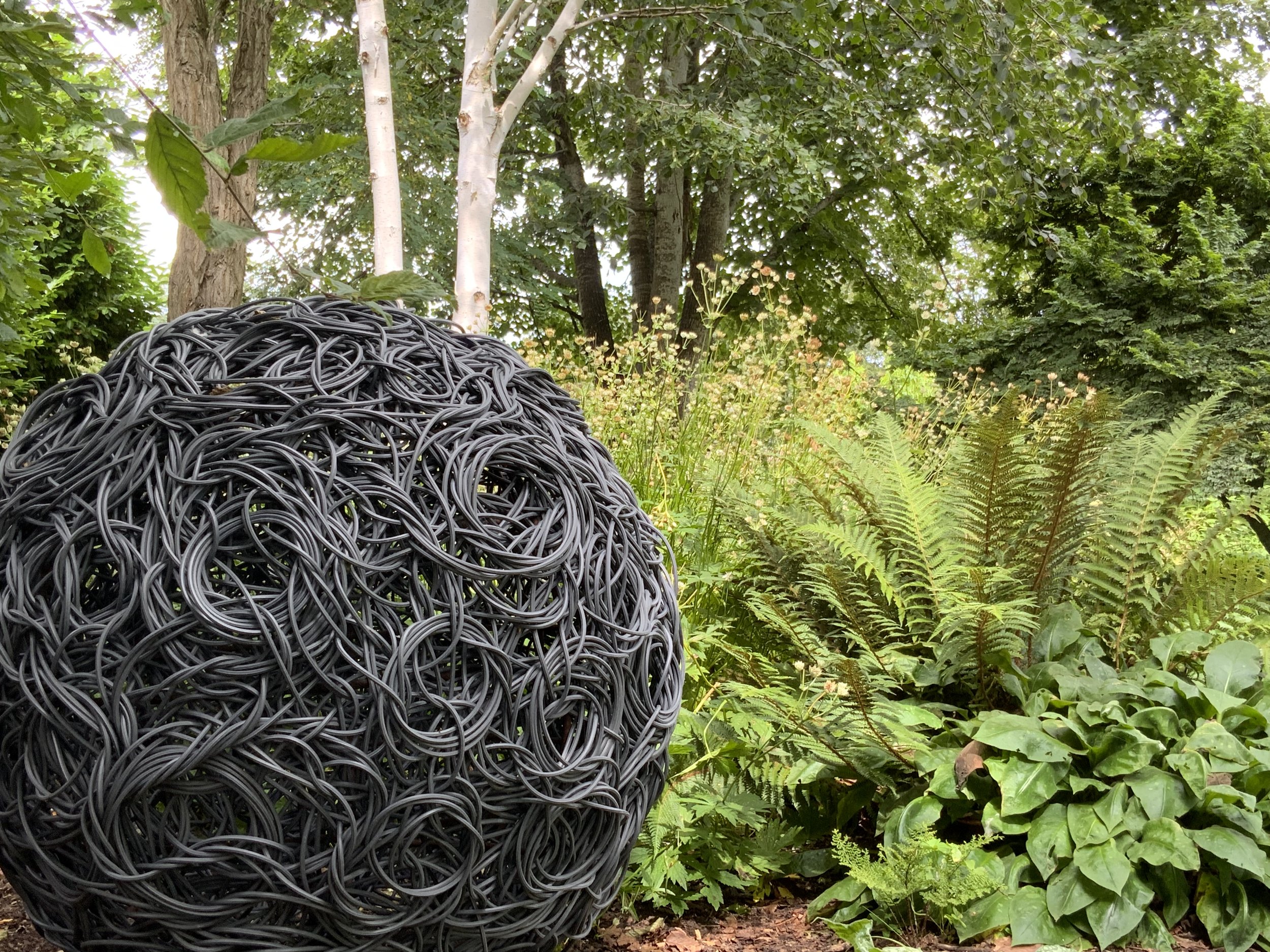
I work from my garden studio in the East Midlands, where the processes at the heart of my practice can unfold slowly and experimentally.
It is a place for making, testing and discovering — where materials can be handled, altered and reworked, and where ideas develop through the physical act of making.
The studio connects the different parts of my practice: weaving and casting, research and experimentation, inherited techniques and new possibilities.
This is where the work begins.
From textile to bronze
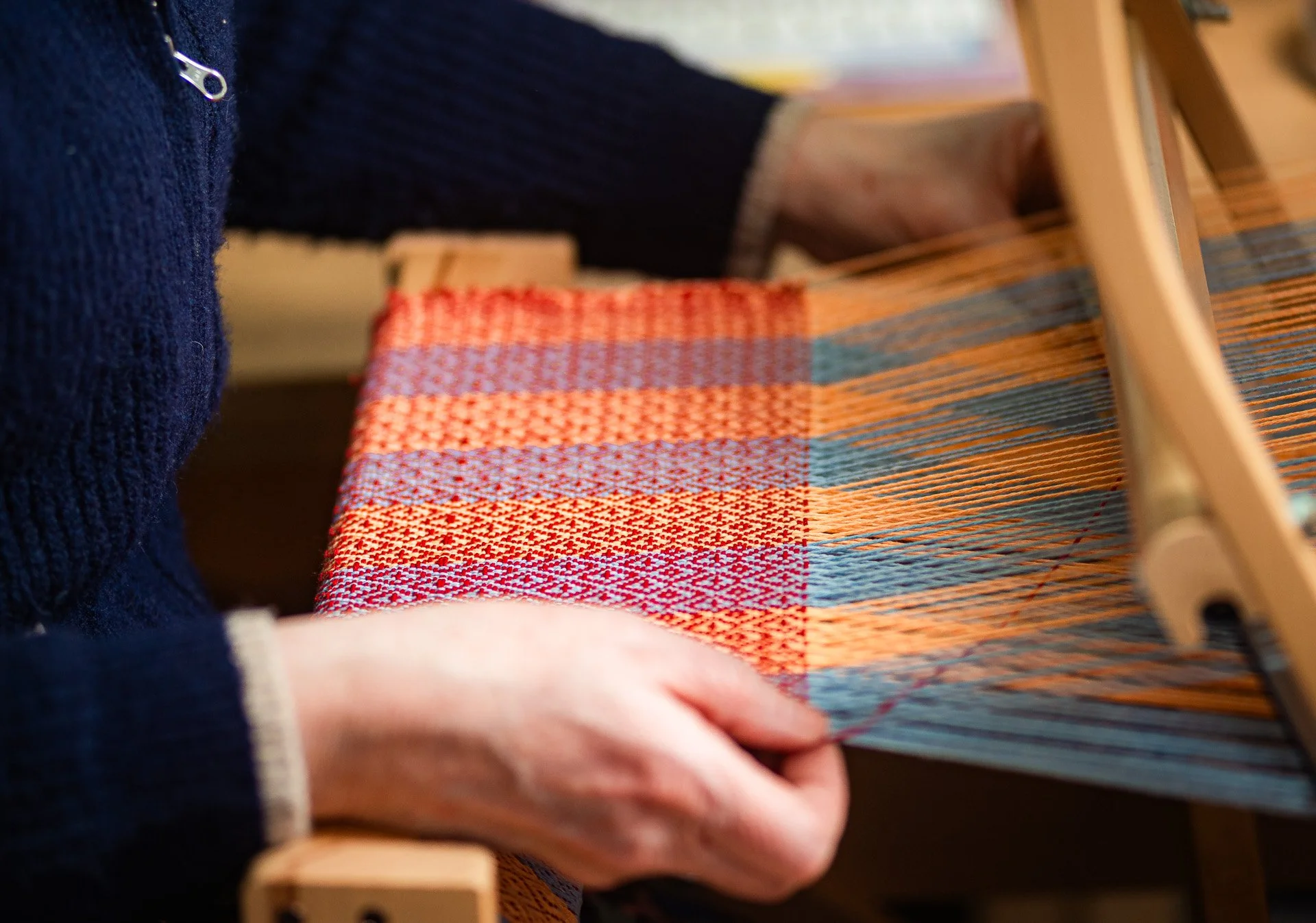
My practice began with an exploration of how textile processes could be translated into sculpture. I became fascinated by the structures created through weaving, knotting, crochet, basketry and macramé, and by the possibilities of taking these familiar processes into unfamiliar materials.
In 2013 I developed a way of weaving directly in wax, creating delicate three-dimensional structures that could then be cast into bronze using the lost-wax process. What began as an experiment became a defining part of my practice.
The transformation from wax to bronze is important to me. Something that begins as fragile and temporary becomes permanent, while the marks and gestures of the original making remain visible in the finished sculpture.
I continue to experiment with materials, processes and technologies, including digital processes that allow hand-made structures to be translated and transformed in new ways.
The work sits between craft and sculpture, between inherited knowledge and experimentation, and between the hand-made and the industrial.

Making histories visible
History is an important thread running through my practice. I am drawn to the stories held within places and communities, and to the people whose work and experiences have shaped them.
Many of my projects begin with research — looking at archives, landscapes, family histories and local narratives, and finding ways to translate what I discover into sculpture.
I am particularly interested in histories that have been overlooked or are not immediately visible: the everyday lives, labour and knowledge that sit behind the stories we choose to remember.
My projects have explored subjects including women's histories, migration, religious persecution, industrial heritage, enslavement, indentured labour and exploitation. Working collaboratively is often part of this process, with community weaving, workshops and conversations becoming part of both the research and the making.
The resulting sculptures are not intended simply to illustrate history. They offer another way of encountering it — through material, gesture, place and the physical presence of an object.

BACK TO THE CAVE
The Full Spectrum
23rd May - 31st August 2025
Gallery Pangolin and Clearwell Caves will once again be taking sculpture underground this year. Colour, the key focus for this second venture, is inspired by the artists pigments of yellow, brown, red and purple ochres mined since the neolithic period and still extracted today.
‘Weaving and knotting, formed a strong part of Rachel Carters heritage in textiles, and was in part the inspiration behind her weaving a tangled web of wax, not unlike a weaver bird that knots its leaf fibre nest and creates a delicate sphere. Medium Bronze Sphere was a maquette for the much larger metre diameter sculpture cast for the Derwent Valley. In this setting the small and precious blue-green sphere brings to the fore the first colour photographs of our own blue-green planet from the dark black space. Pale blue/green patinas are a combination of copper nitrate and bismuth nitrate. These metallic salts are the basis for a wide range of pale patinas, the white oxides of Bismuth reacting on other chemical colours like titanium white would with the use of gouache.’