Standing In This Place
A Sculpture & heritage project
Created by sculptor Rachel Carter & the Legacy Makers
Commissioned by The National Justice Museum
The story behind Standing In This Place
Standing In This Place grew from a personal journey into my own family history and a wider exploration of the people whose labour shaped the industrial Midlands.
While researching my family ancestry, I discovered four of my ancestors working at the cotton mill in Darley Abbey. The 1871 census records Sarah, aged 15, Rufus, 14, Jane, 13, and Elizabeth, just 11 years old, as “cotton factory hands.”
Seeing their ages written alongside those simple words brought the reality of their working lives into sharp focus. These were children and young people working in the cotton industry at a time when the labour of women and children was an essential part of industrial production.
Like many working-class women and children, their lives left only a small trace in the historical record. They were born, worked, married, had children and died, with little evidence remaining of the lives they actually lived or the conditions in which they worked.
The more I researched, the more interested I became in the people behind the textile industry — the women and children whose hands and labour helped build the wealth of the region, yet whose stories have often remained hidden.
This research brought me into conversation with the Legacy Makers, a Nottingham-based community research collective exploring the city's connections to transatlantic enslavement and the experiences of Black communities in Nottingham today. Together, we began to explore the connections between the women and children working in the cotton mills of industrial Britain and the enslaved African workers whose labour produced the cotton that fed the industry.
The sculpture grew from these conversations.


The sculpture
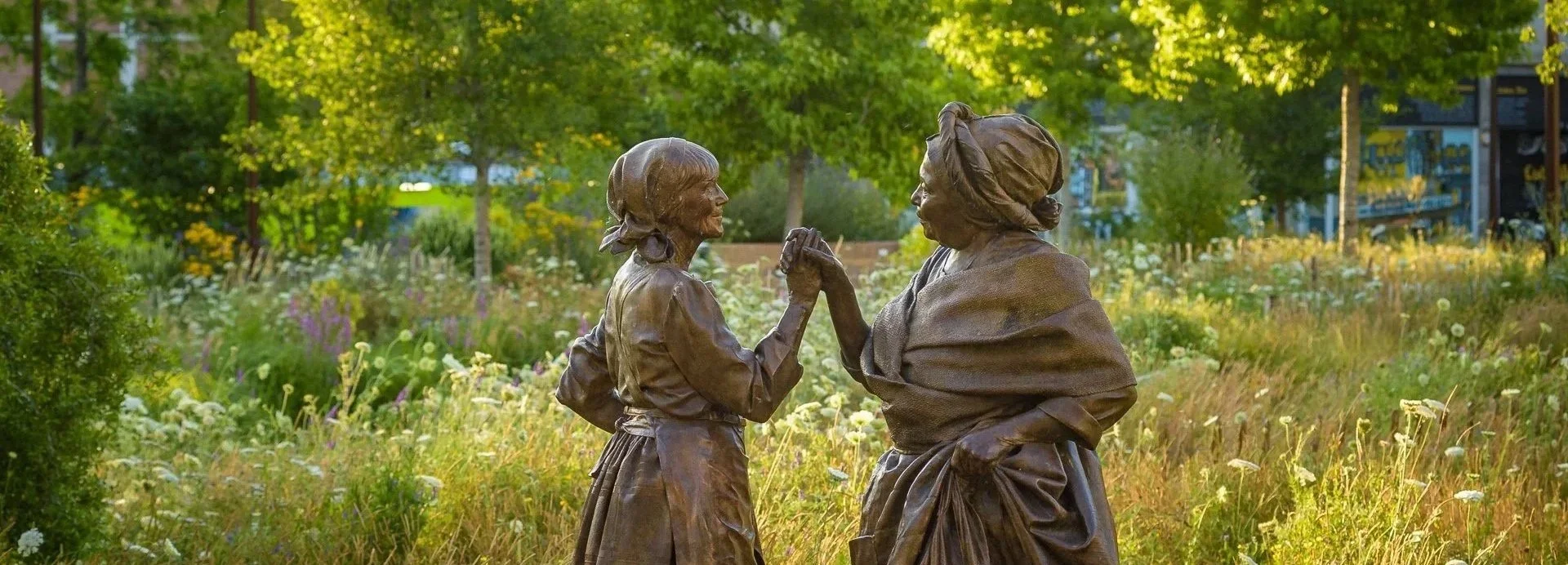
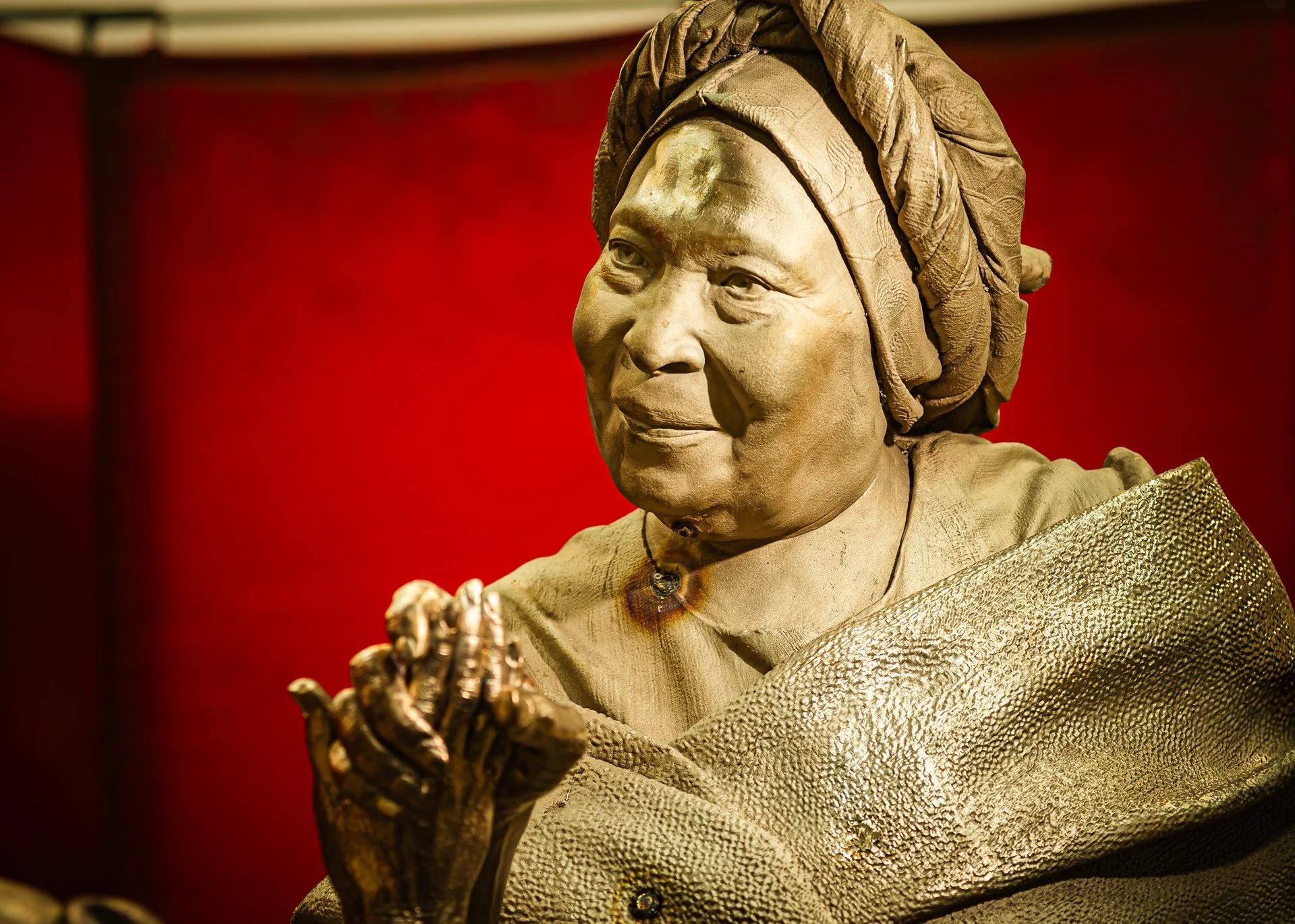
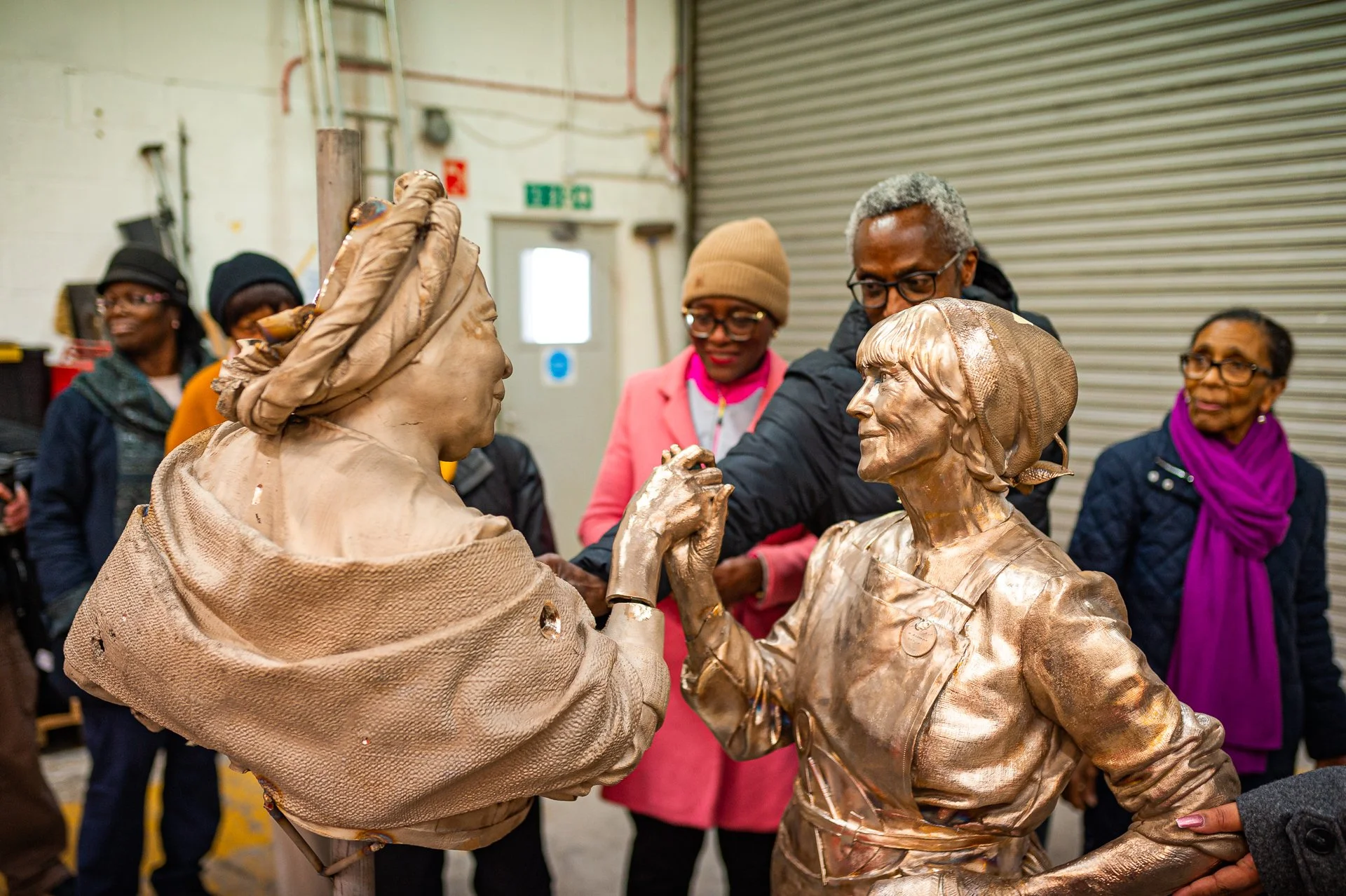
The sculpture brings together two women: an African woman and a millworker from the industrial Midlands. They stand side by side, connected through the histories of cotton, labour and the communities whose lives were shaped by its production.
I wanted the sculpture to contain stories that might not be immediately visible. Just as layers of history can be uncovered beneath the places where we live and work, the sculpture reveals its own hidden layers.
At its base, the earth appears to break open, revealing swirling patterns. These are the braids created by women across the Midlands who took part in the project in 2022. Each woman learned to braid using a fill-gap braiding wheel before choosing and sending me her favourite braid. The braids were then scanned, digitally mapped and transformed into bronze, bringing the women's contributions into the permanent structure of the sculpture.
There are other stories hidden within the figures.
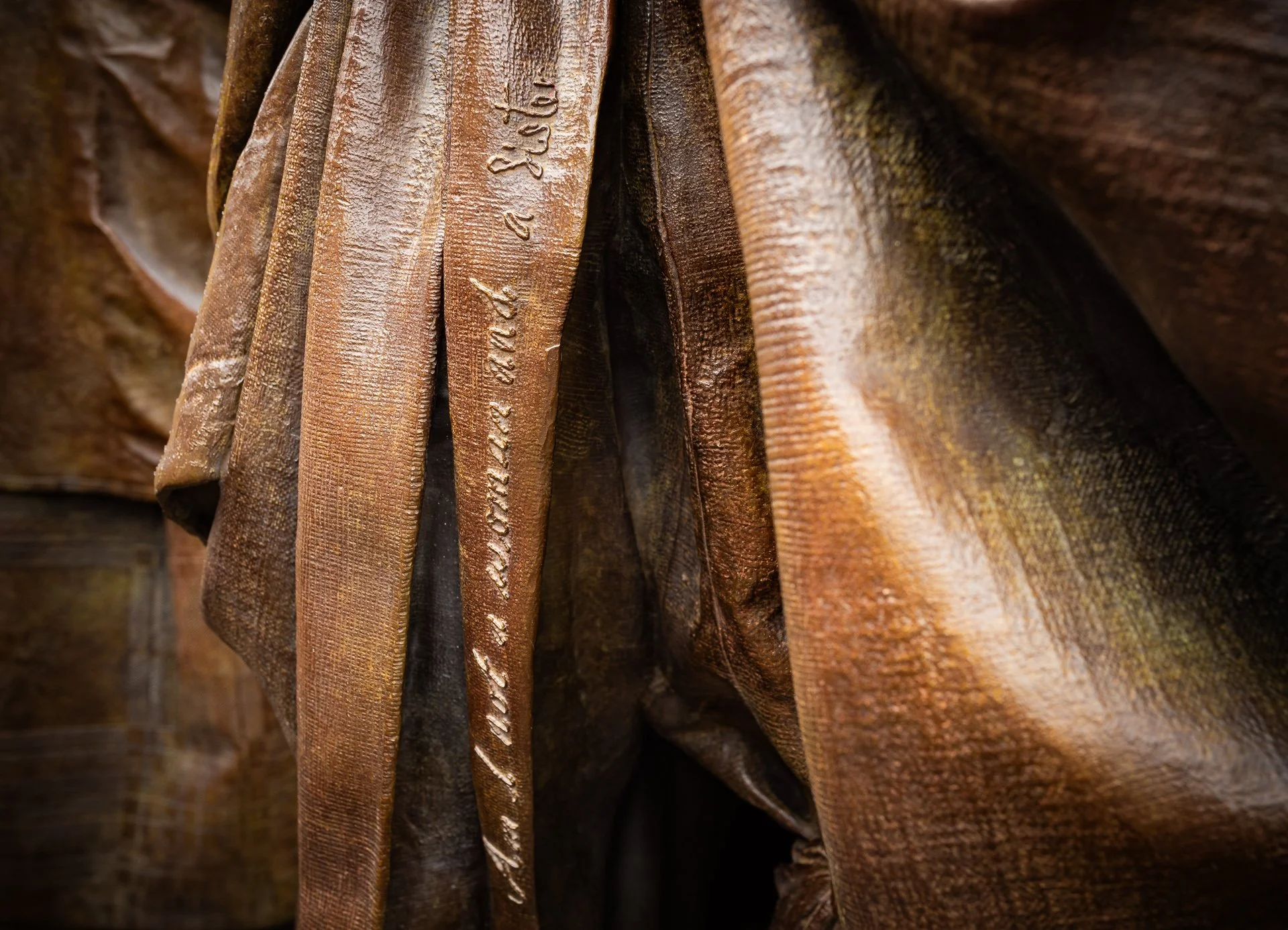
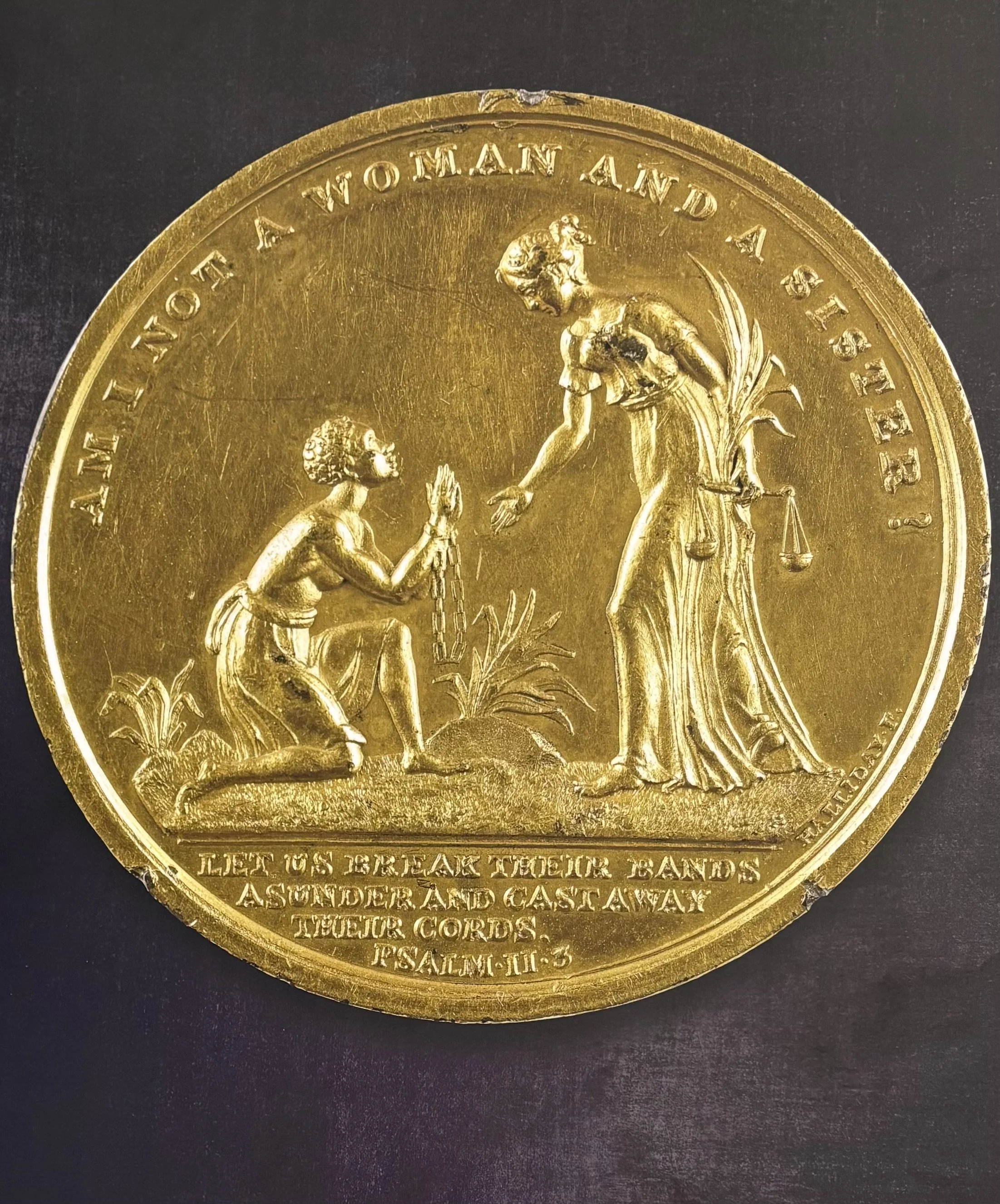
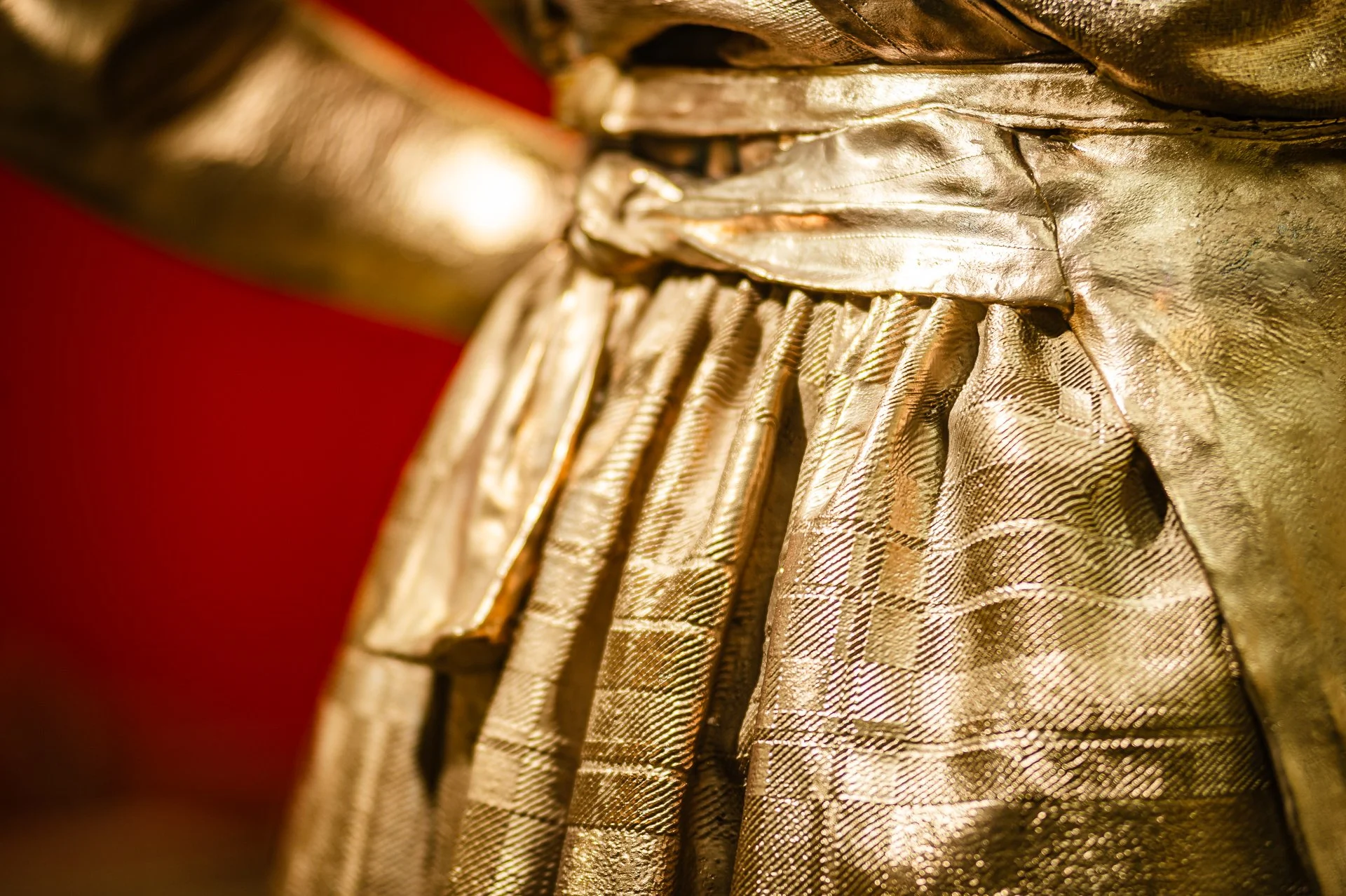
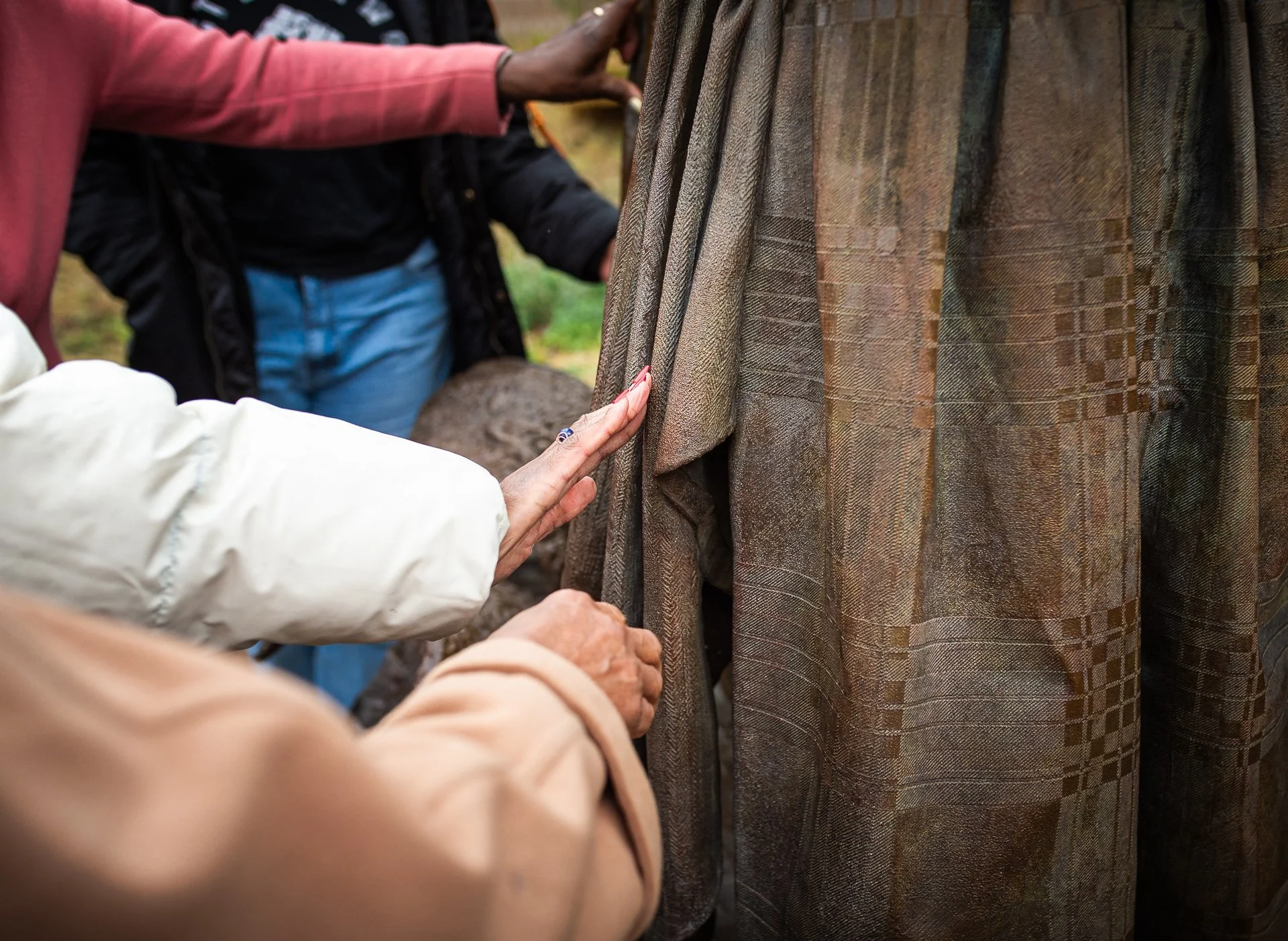
The African woman lifts her skirt to reveal a piece of text stitched into the hem: Am I Not a Woman and a Sister? The words connect to the abolitionist movement and to the small Wedgwood medallions that became an early symbol of opposition to the trafficking and enslavement of African people. Within the sculpture, the words become a woman's own quiet act of protest — a message concealed within her clothing, but deliberately revealed to the viewer.
Her apron also contains a pocket. Through conversations with the Legacy Makers and shared family meals, we explored the history of the Caribbean dumpling, journey cake or johnny cake. Enslaved women working in the fields could carry food in their pockets, sometimes keeping a piece to feed a child during long hours of labour. The pocket became a small but significant detail within the sculpture, carrying a story of care, survival and motherhood.
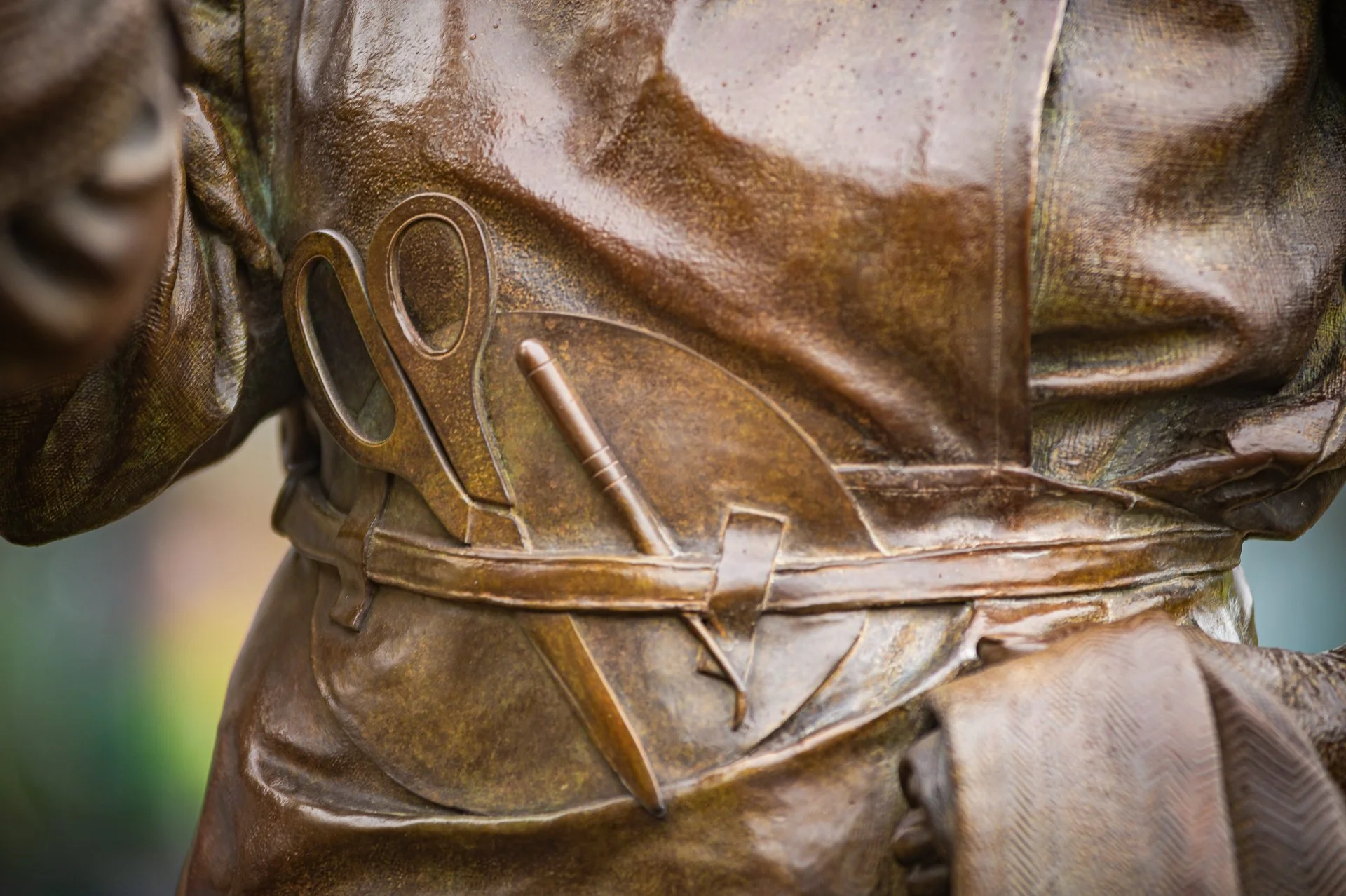
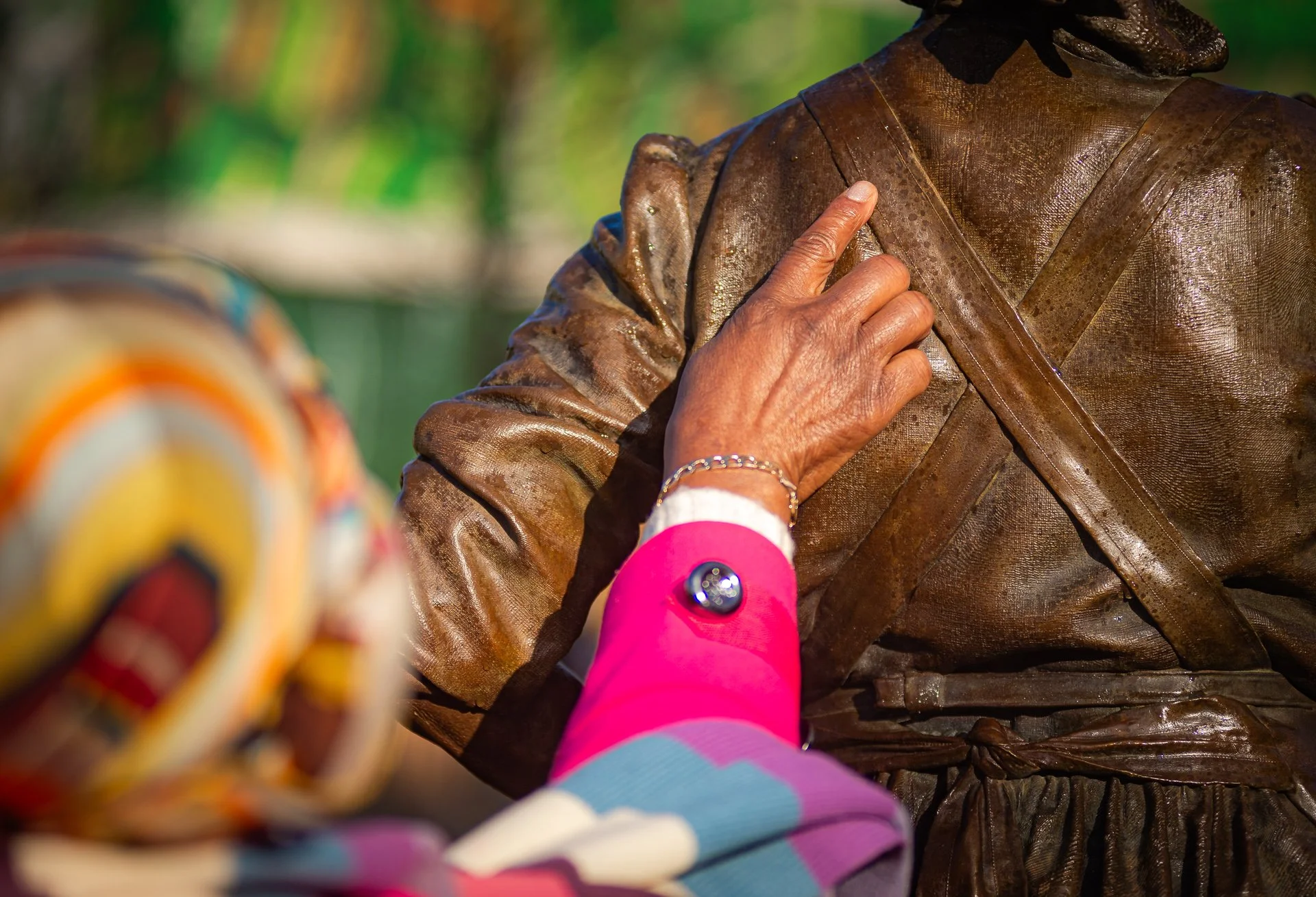
The millworker carries details from the everyday working life of women in the textile industry. Attached to her apron is a small piece of leather incorporating scissors and a bodkin. Research suggested that millworkers used scraps of leather to protect their clothing from the repeated movement of tools against their apron strings — a small practical adaptation made by women who could not afford to damage the clothes they depended upon.
And beneath both women are footprints.
I had been researching my own ancestors, including those who worked in the cotton mills and lace industry, while the Legacy Makers were researching ancestors who may have been enslaved. We found a shared desire to honour those who came before us and to walk in their footsteps.
The footprints are those echoes of the past — a reminder that the histories we inherit are not only found in documents and archives, but in the places where people lived, worked and stood.
The making of the sculpture
Standing In This Place grew from a meeting of histories, people and making processes.
From the beginning, I knew that I wanted the sculpture to carry the physical qualities of textiles into the figures themselves. Hand processes are central to my practice, and I wanted the clothing, textures and intricate details to retain something of the human touch.
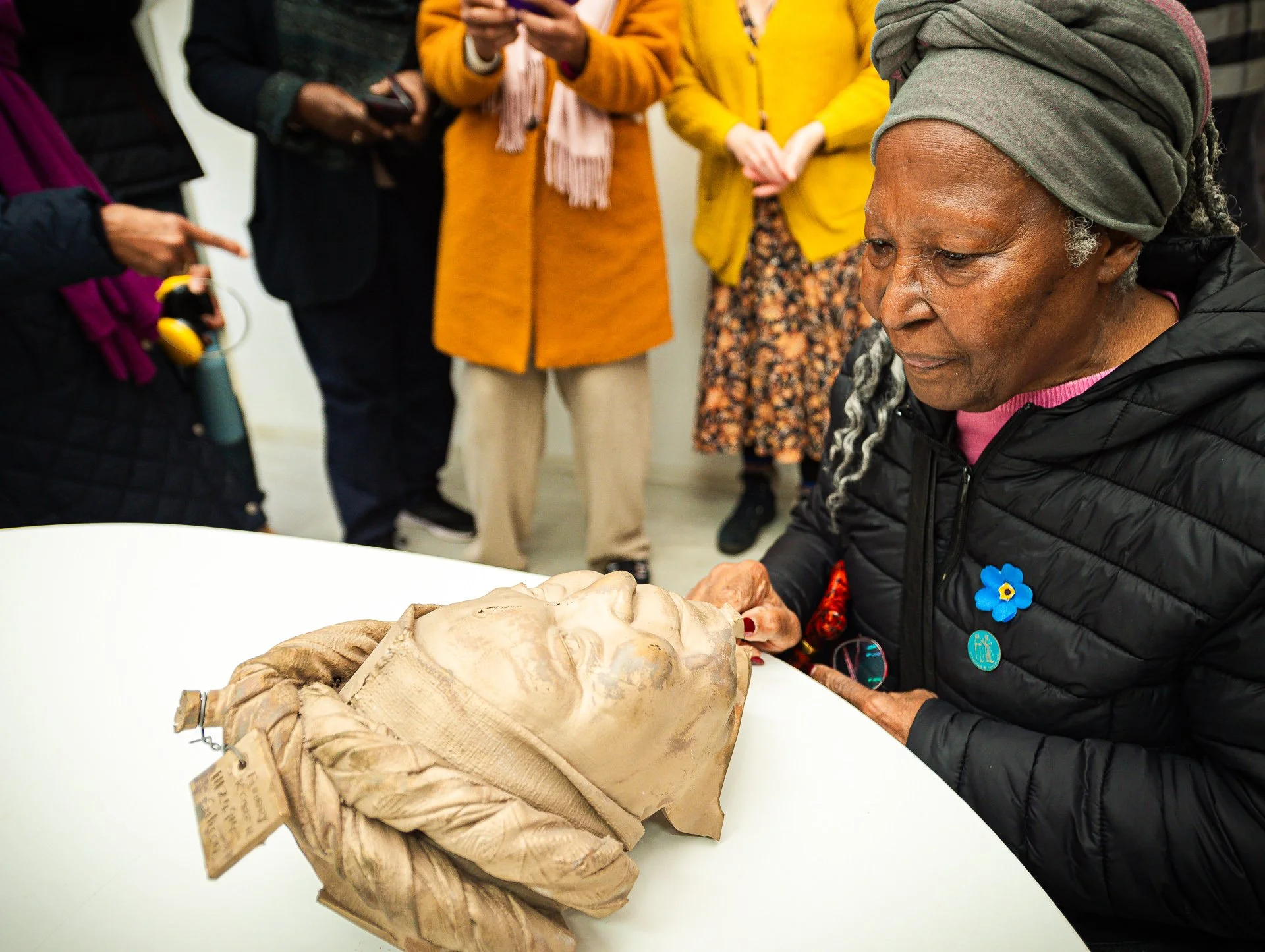
I worked with real-life models, dressing them in period-inspired clothing before using digital scanning to capture their forms. This allowed me to hold a particular moment in time — the folds of fabric, the position of the body and the details created through making — and then translate that information into sculpture.
The digital process became a bridge between the handmade and the cast. The scanned figures were segmented into individual sections and 3D printed using a specialist polymer that behaves like wax. These pieces could then be assembled, refined and prepared for the traditional lost-wax casting process.
Alongside this, the handmade braids created by women across the Midlands became an important part of the sculpture. Each braid was scanned and digitally mapped before being transformed into bronze, bringing the contributions of the women who took part in the project into the permanent artwork.
The process of making moved continually between old and new: hand-made textile techniques, digital capture, 3D printing, traditional wax working and bronze casting. Each stage left something behind and created the possibility for the next.
At the foundry, the printed wax sections were fitted with channels and runners to allow the molten bronze to flow through the mould. Layers of ceramic were built around the wax before it was heated and removed, leaving an empty space ready to receive the bronze.
The final sculpture is therefore the result of many transformations — from person to digital data, from data to wax, and from wax to bronze. What began as research, conversation and hand-made contributions became something permanent.
For me, this is where the hidden language of the sculpture lies. The finished bronze may appear still and solid, but within it are traces of the people, processes and histories that brought it into being.


The people behind the sculpture
Standing In This Place was created through collaboration.
At the heart of the project were the Legacy Makers — a Nottingham-based community history group whose research into their own family histories brought new perspectives to the story of the sculpture. Meeting the Legacy Makers changed the way I understood the project. Their experiences, questions and discoveries became part of the conversations that shaped the work.
My own starting point was personal too. I had been researching my ancestors and their connections to the cotton mills and lace industry of the Midlands. As we shared our research, I began to see the connections between these histories — connections that can remain hidden when each story is viewed in isolation.
The sculpture brings two women together who would never have stood side by side in their own lifetimes: an enslaved African woman working in the American cotton fields and a white woman working in the East Midlands textile mills.
Their lives were shaped by very different circumstances, but they were connected by cotton and by the systems of labour and production that stretched across the Atlantic.
For me, bringing these two women together was not about suggesting that their experiences were the same. It was about making visible a connection that had been there all along.
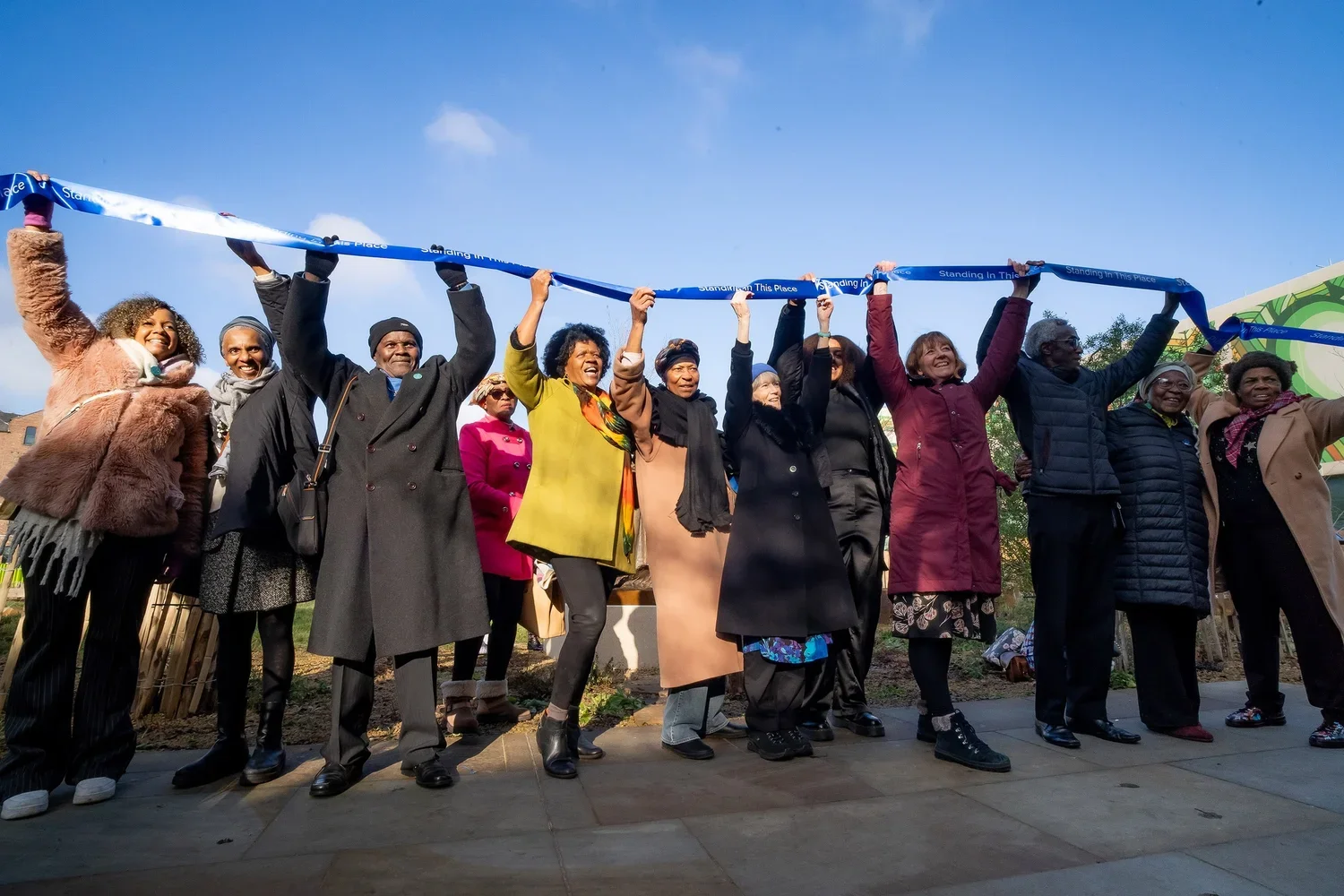
The project brought together historians, academics, artists, community researchers and members of the public. Women across the Midlands contributed their own hand-made braids, while others took part through creative workshops, conversations, poetry, dance and stitching.
Each contribution became part of a much larger story.
The sculpture is therefore not the work of one person alone. My role was to bring these histories, voices and contributions together through the process of making — creating a permanent artwork that could hold them in one place.
Standing In This Place is a sculpture, but it is also a record of collaboration: a meeting point between different histories, generations and communities.
Special thanks to Lamar Francois for capturing our journey in photography.
The journey continues
One of the unexpected outcomes of Standing In This Place was that it led me back to university.
The project deepened my curiosity about the histories behind the work and strengthened my desire to understand the lives of the people I was researching — particularly the women whose stories have often been overlooked or left hidden within the wider histories of industry, migration and labour.
Inspired by my own ancestors and by the heritage projects I have developed through my practice, I am now reading for a Master's Degree in History.
For me, the relationship between research and making continues to evolve. The questions that begin in the archive can find their way into the studio, becoming material, form and sculpture. And the process of making often leads me back to new questions about the past.
Standing In This Place has therefore become more than a completed public artwork. It has opened up a new chapter in my practice — one where art, heritage, research and history continue to inform one another.