Your Custom Text Here

10 years since the unveiling of The Heanor Wings & Wheel Sculpture
In 2010 Rachel was commissioned by Amber Valley Borough Council to create a gateway sculpture in the town of her birth.
Heanor in South Derbyshire has a rich industrial history, from textiles and hosiery to coal. The sculpture sits on the corner of the old site of I R Morley's, a textile manufacturer established in 1795 whose premises in Heanor employed over 1000 people until it closed towards the end of the 20th century.
I R Morley's logo featured a wheel set in a pair of wings titled the Flying Wheel and was the first company logo added onto a piece of clothing.
The sculpture takes inspiration from this story and presents a wing either side of the sculpture which is punctured by a large wheel representing industry and regeneration.
In 2010 Rachel was commissioned by Amber Valley Borough Council to create a gateway sculpture in the town of her birth.
Heanor in South Derbyshire has a rich industrial history, from textiles and hosiery to coal. The sculpture sits on the corner of the old site of I R Morley's, a textile manufacturer established in 1795 whose premises in Heanor employed over 1000 people until it closed towards the end of the 20th century.
I R Morley's logo featured a wheel set in a pair of wings titled the Flying Wheel and was the first company logo added onto a piece of clothing.
The sculpture takes inspiration from this story and presents a wing either side of the sculpture which is punctured by a large wheel representing industry and regeneration.


Paper Murmuration
Rachel was commissioned by Platform Thirty One to create an art installation for this years Alfreton Festival, Derbyshire which took place on the 28th & 29th September.
The installation in St Martins Church was created from over 1000 individually woven paper units using the five stranded spiral corn dollie weave.
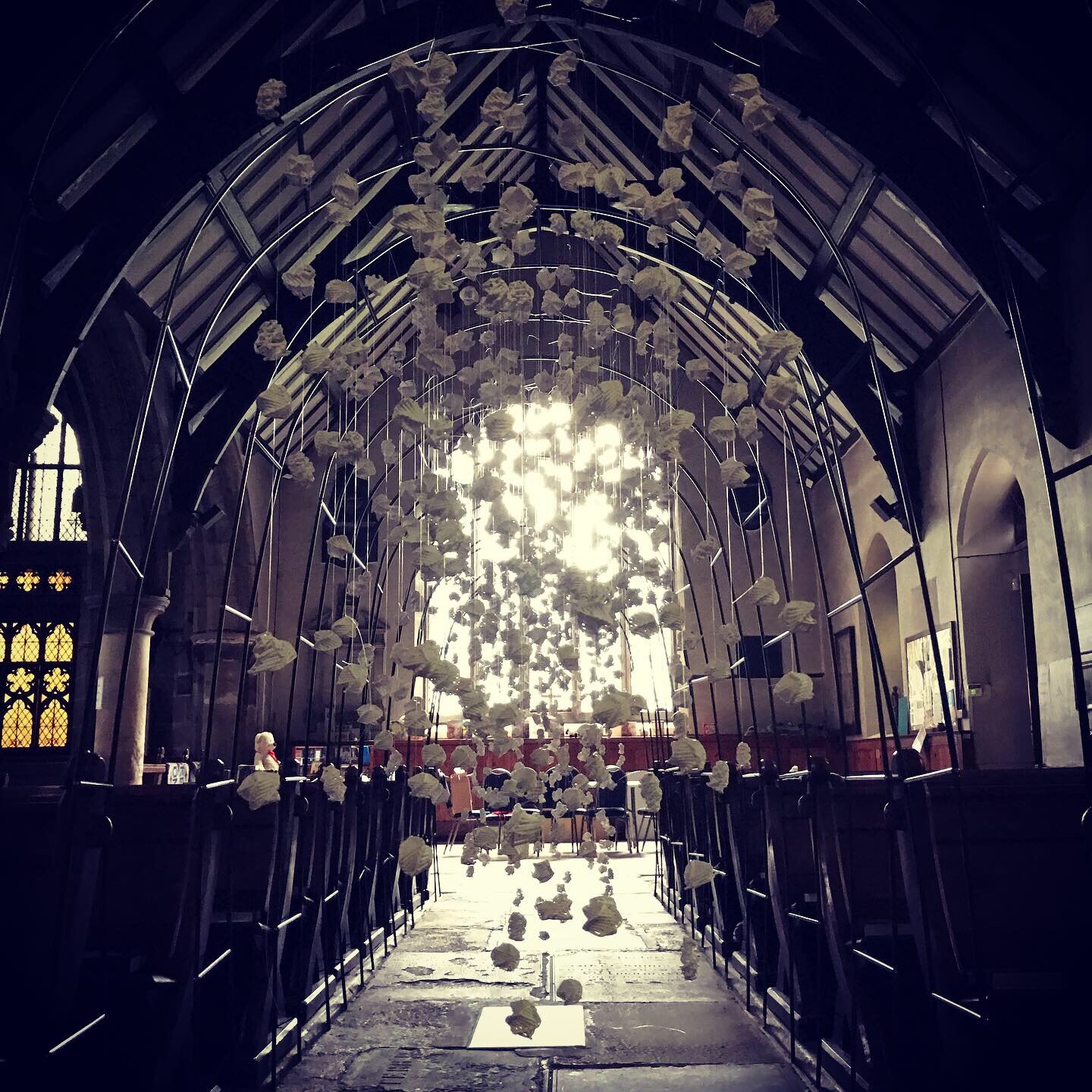
Over 1000 individually woven corn dollies create this paper installation
A Spirit of Mayflower both sides of the Atlantic
Gainsborough Old Hall is a key landmark in Mayflower Pilgrim history, as it was owned by William Hickman who was a key member of the separatist movement. You can read more about this here.
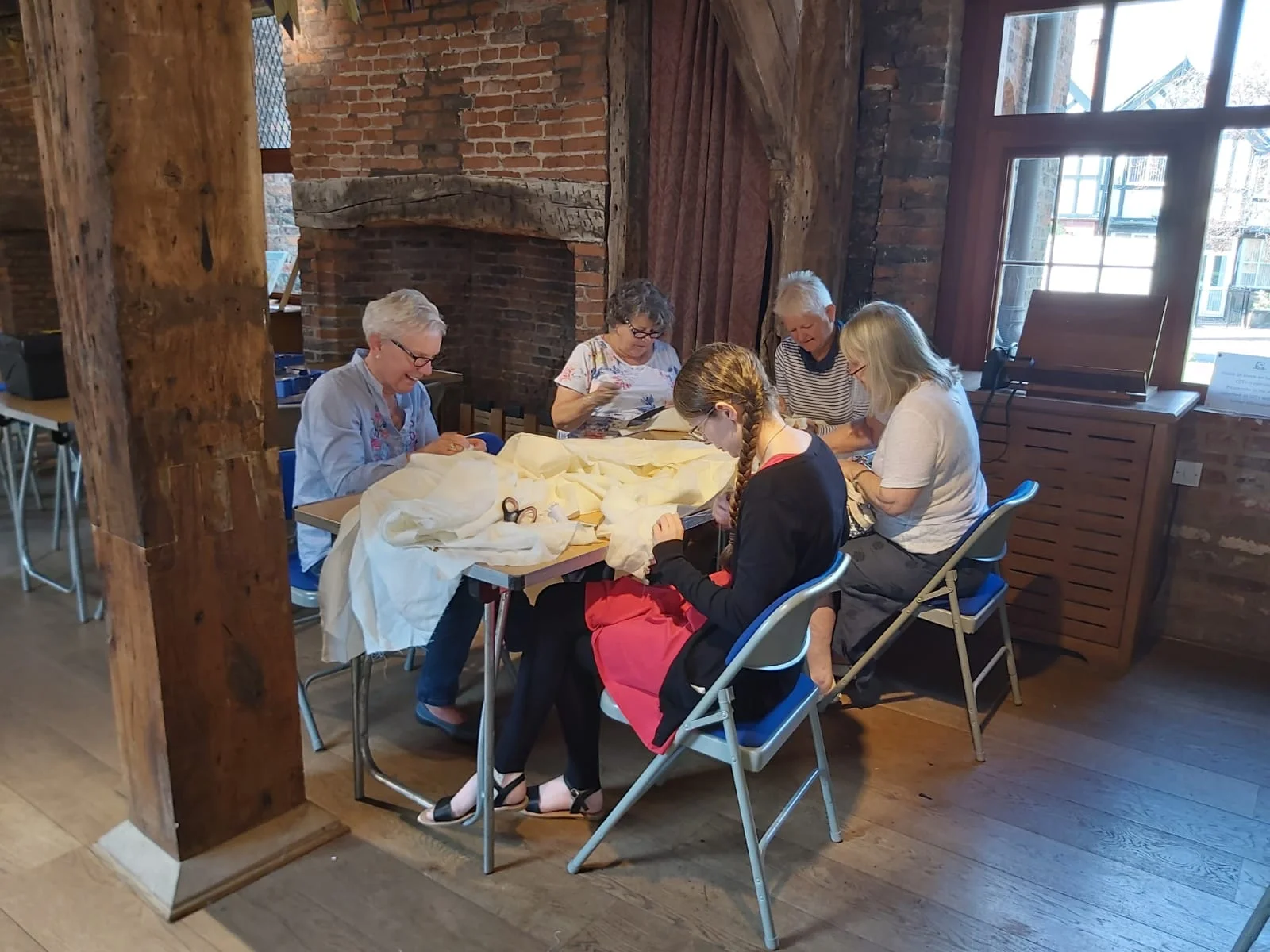
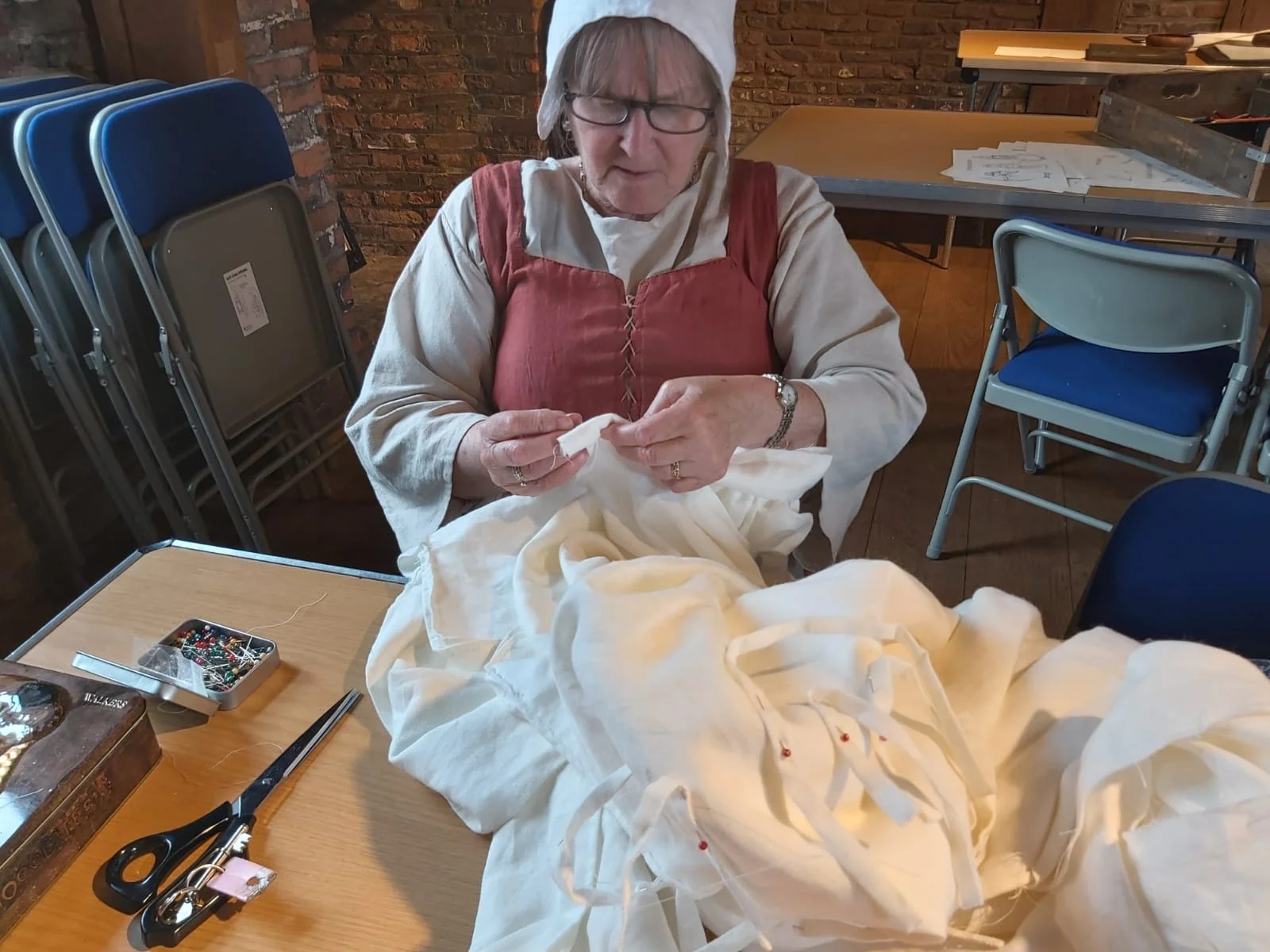
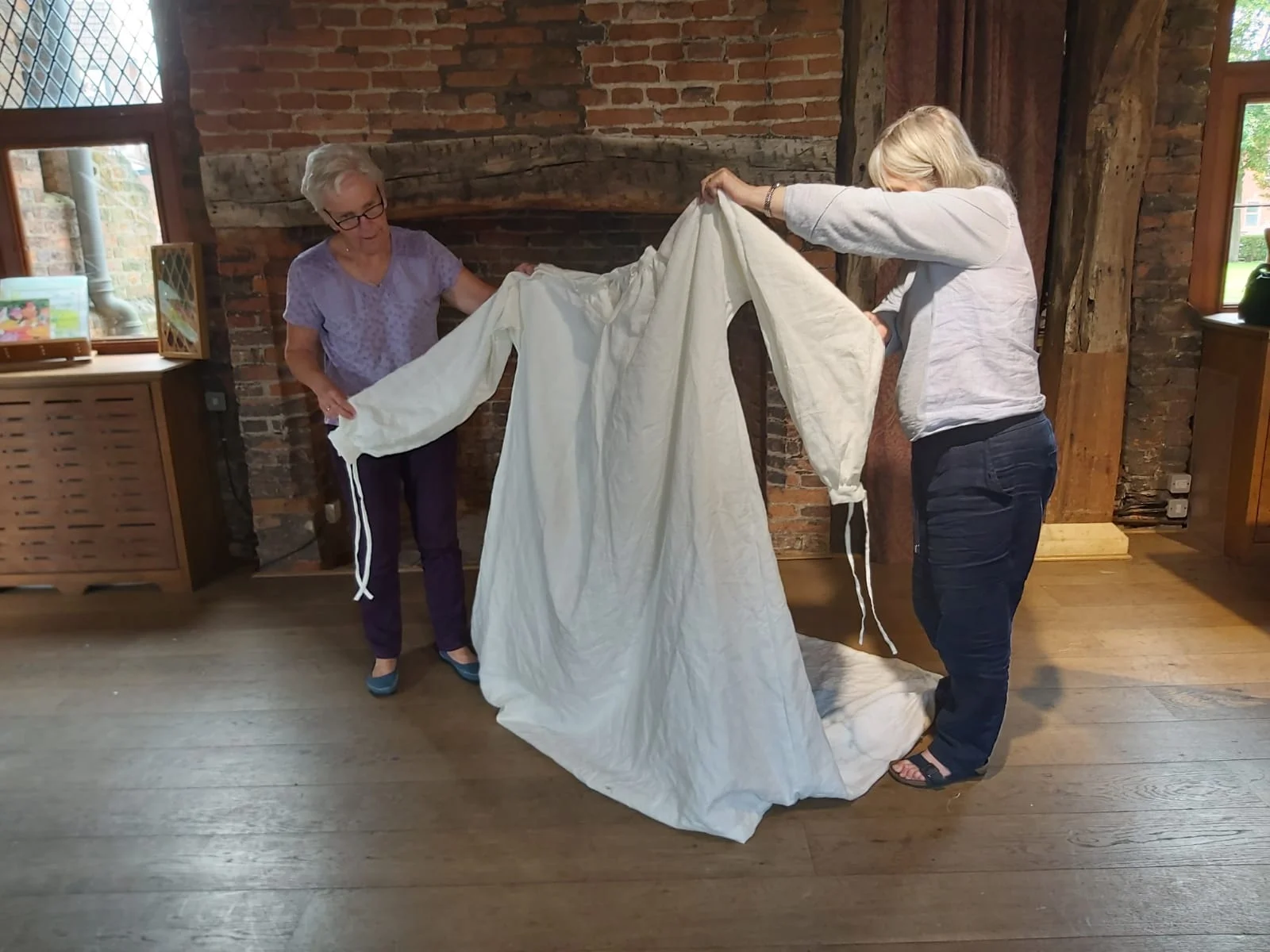
The Old Hall has taught historical sewing techniques and run workshops for women’s groups for many years and there is currently a team which is helping to create a full-sized Tudor dress, which, once completed, Rachel will take to be cast in bronze to form the Pilgrim Woman sculpture as part of her Language of Sculpture – A spirit of Mayflower Project.
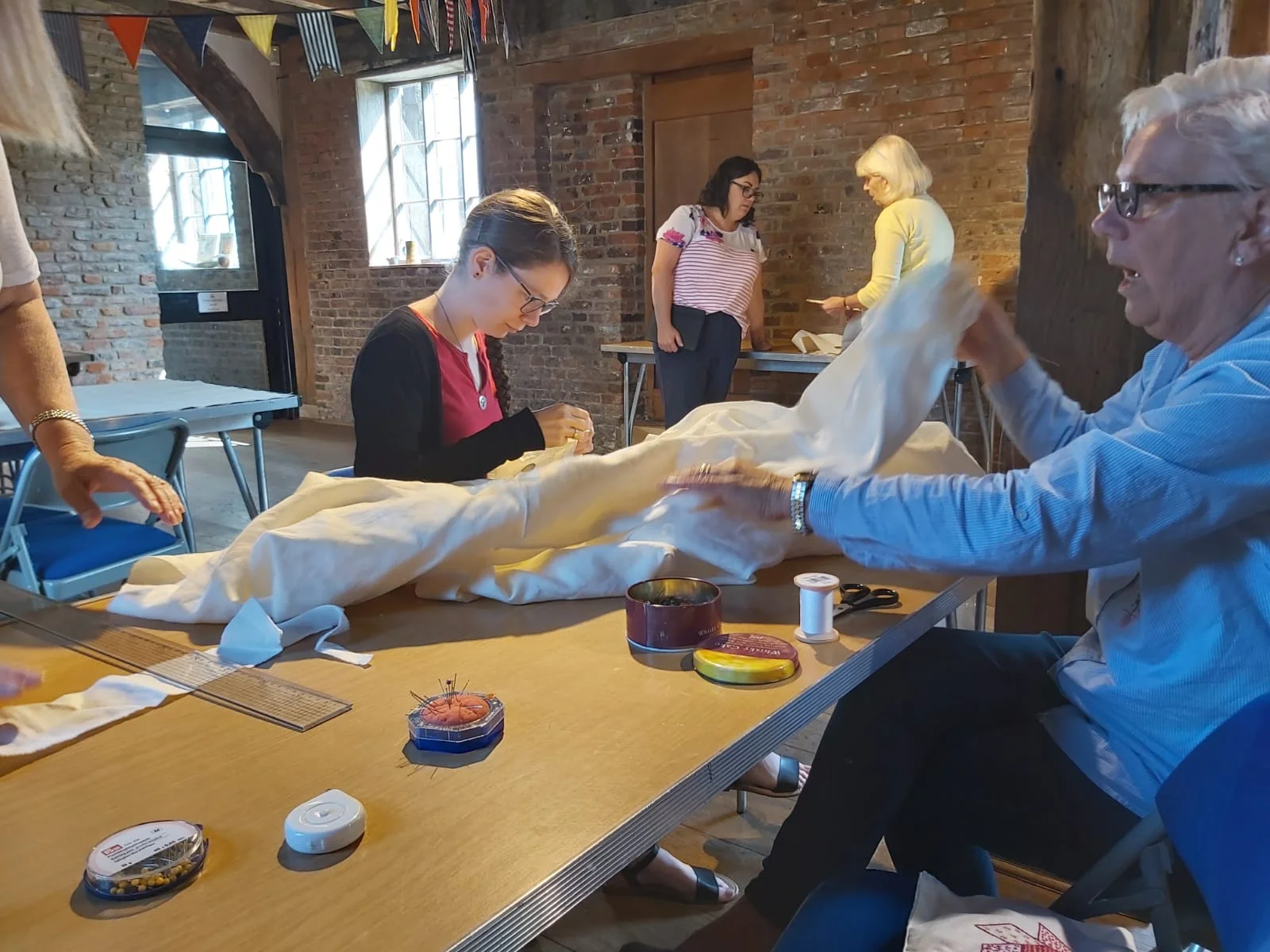
Using their pattern cutting and sewing skills the team of ladies has been busy working on the various sections of a dress design which will be a full sized Tudor-style dress with a fitted kirtle and full skirt, complete with under garments, and created using traditional techniques to ensure it is as close to an original version as possible. The team is also making an experimental foundation garment that will carry wires to add movement for the eventual digital scanning; this is something that is completely new for the group. Find out more about the Old Hall’s Community Textile Project here.

Whilst Rachel is over in Provincetown in the USA a team of seamstresses at Gainsborough Old Hall has been busy working on the Tudor style dress that will be digitally scanned to form the basis of the sculpture which will commemorate the 400th anniversary of the historic Mayflower voyage of 1620.

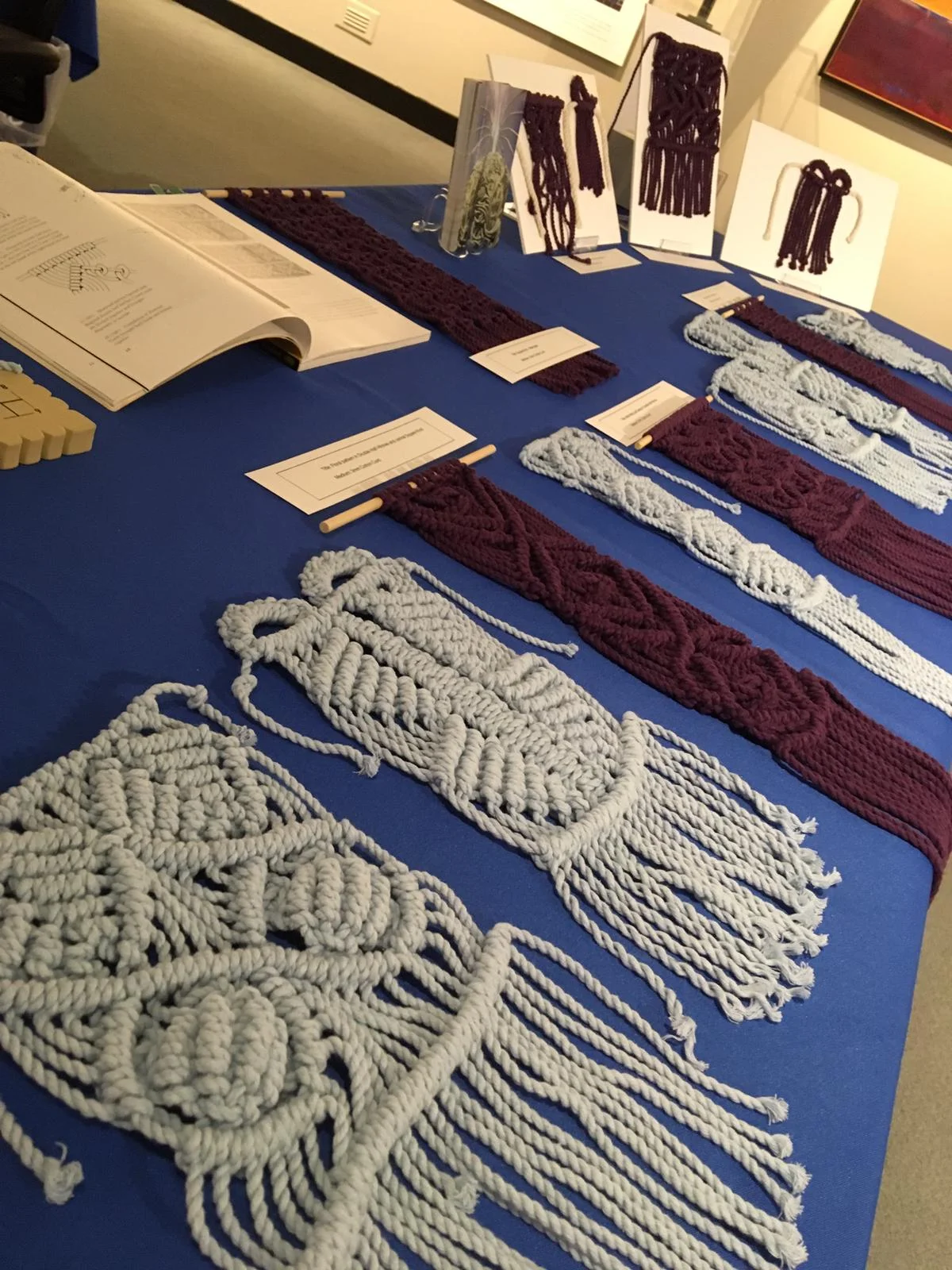
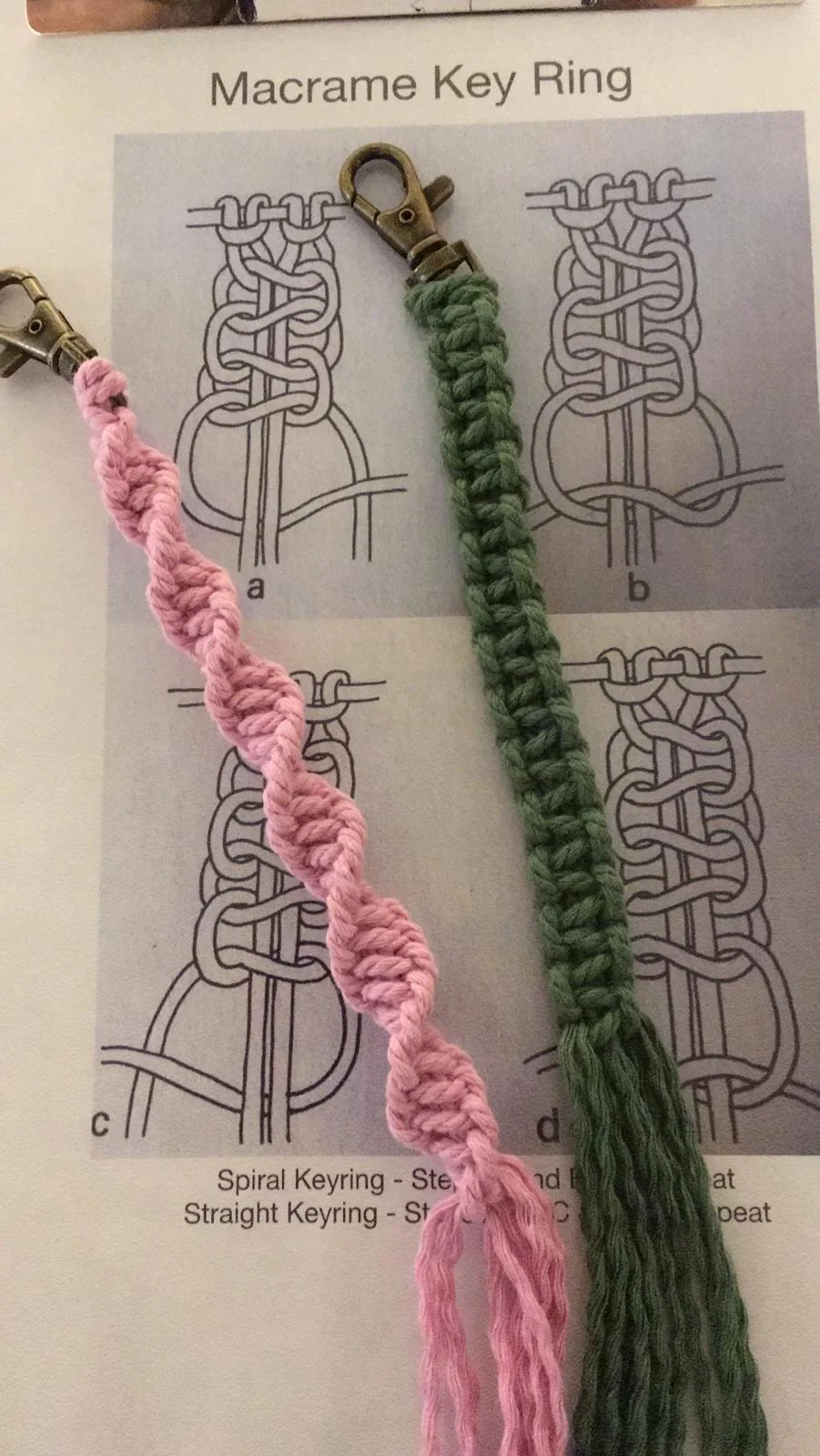
Over in the USA Rachel has been busy teaching visitors to the Provincetown Museum and Pilgrim Monument (PMPM) how to weave using the Macramé method. The museum is close to the spot where the first pilgrims set foot in America and the visit is providing Rachel with plenty of inspiration for the project.
Rachel will complete her residency at the PMPM and return to the UK to carry on developing the project further, the next stage will be to visit women’s groups within the areas where the Mayflower Pilgrims originated from, known as the ‘Pilgrim Roots’ areas, these include Nottingham, Lincolnshire and South Yorkshire, to create a series woven panels to include on the final dress and combine them with those she created during her eight-day journey on board a cargo ship, which set sail from Liverpool Docks at the end of July, and whilst in Provincetown.


The Language of Sculpture – Spirit of Mayflower’ is supported by Arts Council England and endorsed by Mayflower 400 as a Spirit of Mayflower project.
Useful links
https://www.mayflower400uk.org
Sailing to the USA as part of the Spirit of Mayflower project
The journey by boat to the USA is an integral part of her latest project; Language of Sculpture – Spirit of Mayflower project which will commemorate the 400th anniversary in 2020 of the historic Mayflower crossing, this is the boat which carried the first pilgrims from the UK to America in search of a new life.Rachel aims to capture the thoughts and feelings of the Mayflower passengers during her own crossing by reading extracts of William Bradford’s journals he wrote about his own Mayflower crossing, she will also chart her journey through a texture diary where she will spend time knotting using ancient weaving methods of macramé to weave new patterns that are inspired by the Wampum belts of North America’s native Wampanoag people.
The boat will arrive in Halifax sometime around the 5th August, although it could be later depending on the weather, and Rachel will make her way to Provincetown, MA to carry out an Artist-in-Residency at the Pilgrim Monument and Provincetown Museum (PMPM) where she will display the textile art that she made during the crossing, talk to Museum visitors about her project and provide them with the opportunity to learn how to weave.
Upon her return Rachel will combine the weavings created during the Atlantic crossing with 50 new weavings from a series of workshops that will engage women from across the UK Pilgrim Roots areas; Nottinghamshire, Lincolnshire and South Yorkshire to create a sculpture of female figure, outfitted with a Tudor-style dress with a fitted kirtle and full skirt. The 3D sculpture will be used to cast a bronze statue depicting Pilgrim Women to be exhibited throughout the UK during the 400th anniversary of the Mayflower Pilgrims’ voyage to America.
The project was inspired by Rachel’s research into her own family history, which she has traced back to the 1500s, she learnt that many of her ancestors were weavers working in the textile industries of Nottingham and their history is peppered with stories of migration, albeit sometimes smaller in miles, the times and circumstances would still have caused great upheaval.
She relates her family’s roots as weavers with the native Wampanoag people who created weavings that chronicled their milestones and historic events, two distinct groups with no obvious connection but who were similarly experienced in story telling through textiles.
The language of Sculpture – Spirit of Mayflower’ is supported by Arts Council England and endorsed by Mayflower 400 as a Spirit of Mayflower project.
Useful links

The view from Rachel’s ship before it set sail from Liverpool Docks
As we write this Rachel is currently somewhere in the Atlantic Ocean just north of Northern Ireland on boat a cargo ship which is heading to Halifax, totally cut off from communication, her only company will be the small amount of passengers and crew on board the boat.
UK Press Release July 2019
Departing from Liverpool on 27th July, Rachel will chart her journey through a texture diary where she will spend time knotting, stitching and twisting twines and ropes while reading extracts of William Bradford’s journals he wrote about his own Mayflower crossing during her 13-day voyage. She will also be using ancient weaving methods of macramé to weave new patterns that are inspired by the Wampum belts of North America’s native Wampanoag people.
Once in Provincetown Rachel will begin her Artist-in-Residency at the PMPM, displaying the textile art that she made during the crossing, talking to Museum visitors about her project and provide them with the opportunity to learn how to weave.
Upon her return Rachel will combine the weavings created during the Atlantic crossing with 50 new weavings from a series of workshops that will engage women from across the UK Pilgrim Roots areas; Nottinghamshire, Lincolnshire and South Yorkshire to create a sculpture of female figure, outfitted with a Tudor-style dress with a fitted kirtle and full skirt. The 3D sculpture will be used to cast a bronze statue depicting Pilgrim Women to be exhibited throughout the UK during the 400th anniversary of the Mayflower Pilgrims’ voyage to America.
The project was inspired by Rachel’s research into her own family history, which she has traced back to the 1500s, she learnt that many of her ancestors were weavers working in the textile industries of Nottingham and their history is peppered with stories of migration, albeit sometimes smaller in miles, the times and circumstances would still have caused great upheaval.
She relates her family’s roots as weavers with the native Wampanoag people who created weavings that chronicled their milestones and historic events, two distinct groups with no obvious connection but who were similarly experienced in story telling through textiles.
The language of Sculpture – Spirit of Mayflower’ is supported by Arts Council England and endorsed by Mayflower 400 as a Spirit of Mayflower project.

UK artist will recreate the 1620 voyage of the Mayflower in modern-day pilgrimage to the USA
Artist and sculptor, Rachel Carter is set to retrace the historic Mayflower voyage across the Atlantic Ocean to commemorate the 400th anniversary as part of a sculptural project.
Rachel will recreate the 1620 Atlantic crossing of the Mayflower Pilgrims, completely cut off from communication*, spending her time working on her project ‘The language of Sculpture – Spirit of Mayflower’ before she arrives in America to carry out an Artist-in-Residency at the Pilgrim Monument and Provincetown Museum (PMPM) in Boston MA.
Speaking about the crossing Rachel said: “I am making my own pilgrimage to get a sense of the feeling and isolation from my family. I wanted to experience what it would be like to be completely cut off from the rest of the world, and express my experience through textile sculpture.”
USA Press Release July 2019
During her 13-day voyage on a freighter, she will be cut off from the outside world and will be charting her journey through a texture diary where she will spend time knotting, stitching and twisting twines and ropes while reading excerpts of William Bradford’s journals he wrote about his Mayflower crossing in 1620. She will also be using ancient weaving methods of macramé to weave new patterns that are inspired by the Wampum belts of the Wampanoag indigenous people.
“I am making my own pilgrimage to get my own sense of feeling and isolation from my family. I wanted to experience what it would be like to be completely cut off from the rest of the world, and express my experience through textile sculpture,” said Carter.
PMPM Executive Director Dr. K. David Weidner, said that this is a once-in-a-lifetime opportunity for the Museum and its visitors. “Rachel Carter’s Artist-in-Residency is unique because it’s a cross-cultural exchange and also an opportunity for visitors to see history in the making. Rachel’s textile sculpture and expression of her own pilgrimage is an important part of our programming connected to the 400th anniversary of the Mayflower Pilgrims’ first landing in Provincetown,” said Dr. Weidner. “Rachel’s journey, like present day pilgrims that visit Provincetown for safe-harbor, illustrates spirit and determination. Rachel Carter’s visit to the PMPM supports our inclusive mission of diversity, tolerance, and protecting and promoting our history.”
The ultimate finished product, when she returns to the U.K., will be a 3D sculpture of a female figure outfitted with a Tudor gown with a fitted kirtle and a full skirt adorned with weavings she will have made on her journey in addition to weavings made with 50 women from the Pilgrim roots area of the U.K. The 3D sculpture will be used to cast a bronze statue depicting Pilgrim Women to be exhibited throughout the U.K. during the 400th anniversary of the Mayflower Pilgrims’ voyage to America. The Pilgrim Women sculpture will also feature a woman holding an apple, the Pilgrim 400 apple, a special species being grown in the U.K. for the anniversary and which will also be planted in Provincetown.
“The Pilgrim Women sculpture could really change the way fine arts can reinterpret history and story-telling and incorporate items that may be too delicate to touch. By scanning them and making 3D casts, we can create new sculptures that will withstand exhibitions and displays,” she said.
Carter’s project was inspired by research into her own family history that she can trace to the 1500’s in the Midlands of the U.K. from where several Mayflower Pilgrims were from. She said that her family never moved from that region and were illiterate but could weave complex items as frame work knitters. She relates her family’s roots as weavers with the native Wampanoag people who created weavings that chronicled their milestones and historic events, two distinct groups with no obvious connection but who were similarly experienced in story telling through textiles.
When Carter is in her Artist-in-Residence at the PMPM, she will display the textile art she made on the freighter voyage and talk to Museum visitors about her project. She will also provide Museum visitors with the opportunity to learn how to weave.
Prior to her Provincetown Museum Artist-in-Residence, she will visit the Peabody Museum of Archaeology and Ethnology at Harvard University to see Wampanoag artifacts and other artifacts from the 17th centry recently uncovered in Cambridge, Mass. on an archeological dig. Her project, “The Language of Sculpture -Spirit of Mayflower” is supported by the Arts Council England.
About the Pilgrim Monument and Provincetown Museum
Dedicated in 1910, the Monument commemorates the first landing of the Mayflower Pilgrims in Provincetown in 1620. Here they signed the historic Mayflower Compact, the first agreement to establish a government by the people in the ‘new world;’ which became the cornerstone of American democracy. They explored the Cape for five weeks before sailing on to Plymouth. At 252 feet, the Monument is an engineering marvel and the tallest granite tower in the United States. Visitors can climb the Monument’s 116 steps and 60 ramps at a leisurely pace and enjoy a breathtaking view of the entire Cape and visit our webcam for a live “View from the Top.” The Provincetown Museum at the base of the Monument presents engaging exhibitions of important chapters in our national heritage and the Town’s history and oversees Provincetown 400, the committee developing the commemorations for 2020, the 400thanniversary of the Mayflower voyage and landing in Provincetown. Pilgrim Monument and Provincetown Museum is a non-profit educational, tax-exempt 501(c)(3) organization. For more information please visit pilgrim-monument.org.

“Spirit of Mayflower” UK Sculptor Journeys by Sea to Mirror Pilgrims’ Journey
Artist in Residence at the Pilgrim Monument and Provincetown Museum August 11- 25, 2019
Provincetown, Mass. (July 2, 2019) When sculptor Rachel Carter departs Liverpool, England on July 27 via freighter, she will be tracing the Atlantic crossing of the Mayflower Pilgrims while she is working on her project “The Language of Sculpture -Spirit of Mayflower.” Carter’s journey in the U.S. will end in Provincetown where she will be an Artist-in-Residence at the Pilgrim Monument and Provincetown Museum (PMPM) from August 11th through 25th.
Learning New Skills
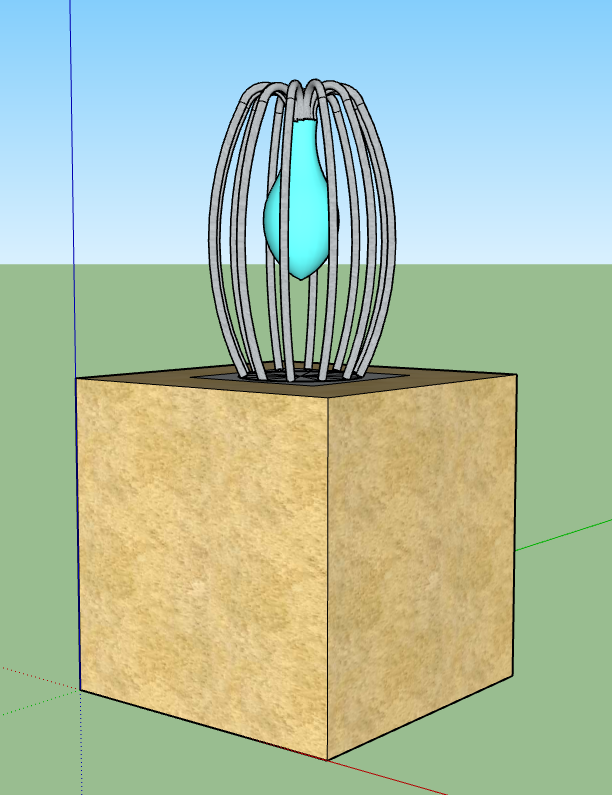
Over the course of the last four months I’ve been learning CAD (Computer Aided Design) alongside the architecture students at Nottingham College as part of an Artist residency. Being a very handy person it was quite a challenge to create on a computer rather than use my hands.
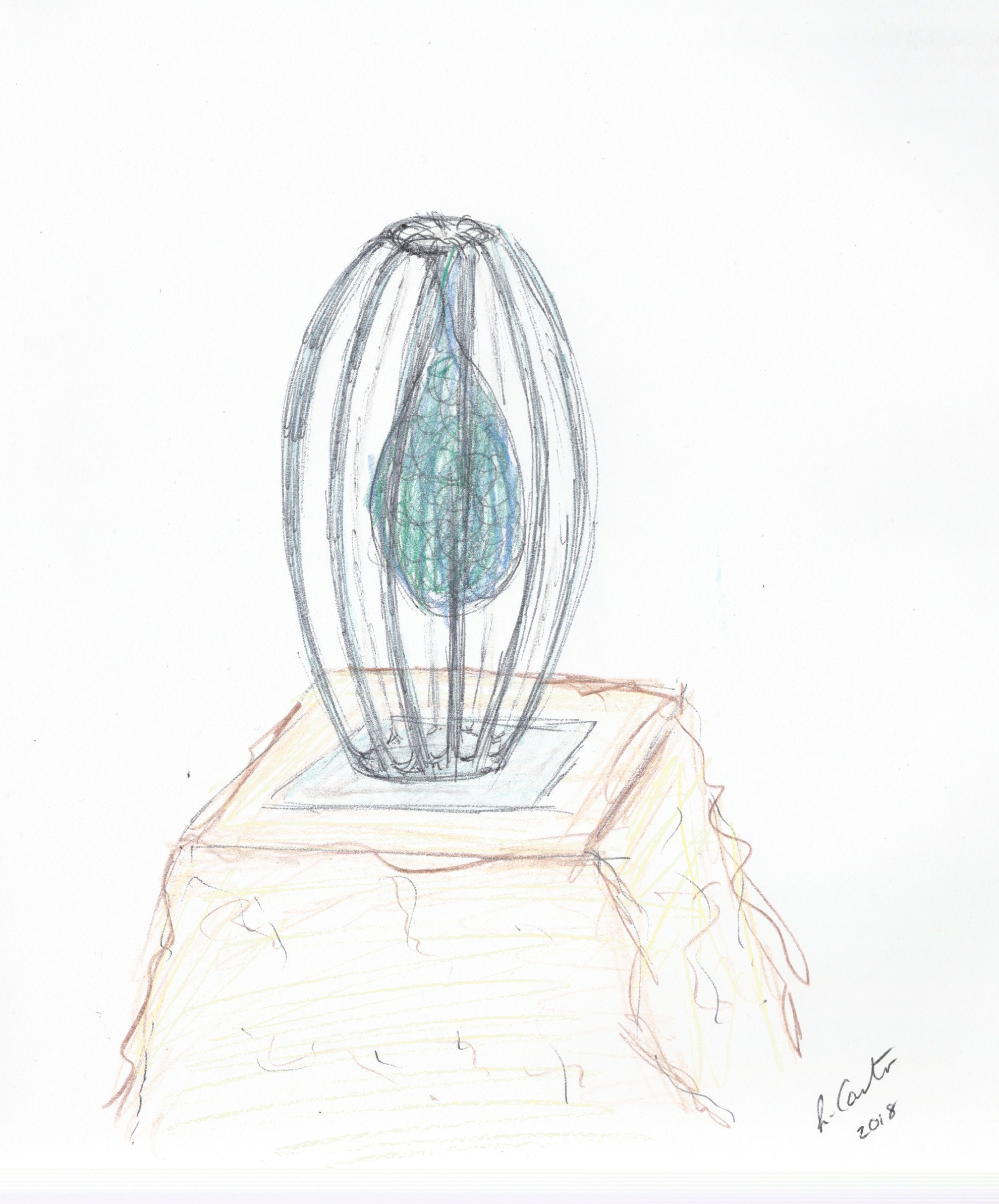
One of the challenges set by my tutor was to complete a task that was asked of me during a recent commission, to create a computer drawing of my proposed sculpture so that the planners could see what the sculpture would look like before it was created. The actual task at the time had to be outsourced and it made me wonder if this could be the first of many requests. Challenge accepted!
The task felt very daunting at first but as the weeks went by I began to get more and more confident with my newly acquired skills. The results aren’t perfect but I feel I created a good digital version that does not look too dissimilar to the actual sculpture. See what you think.
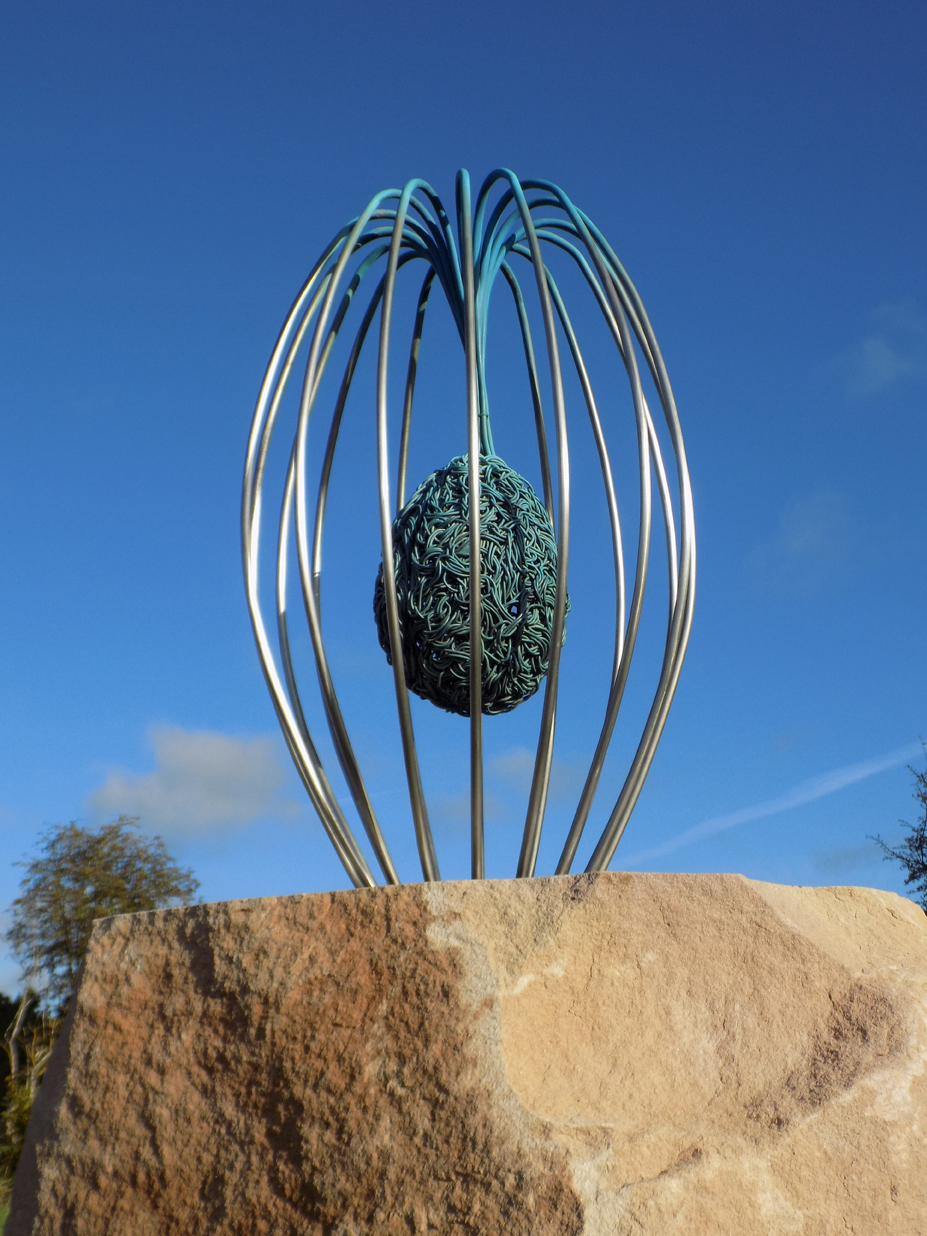
Here are the results; L-R The finished Sculpture, sketch created on Sketch Up, a pencil sketch.
Spirit of Mayflower: Ancient Techniques & Digital

Scan of the Crown Knots
Over the last year I have been working with NTU (Nottingham Trent University) within their Enabling Innovation program to embrace digital technologies within my practice. At first I was a little sceptical about the possibilities of this new burgeoning technology to try and capture the delicate details of something hand woven, but I think we are beginning to see some positive results.
The first items I gave them were some spiral forms made using the corn dollie 5 stranded spiral weave, which they digitally mapped and then printed with the new 3d clay printer. The results were very interesting and I shall share these with you in a later post.
After experimenting with clay, we moved on to a 3d printer with a synthetic polymer, and the test piece was a length of macrame knots woven in a 4mm thick cotton cord. The piece was worked over a wire core to enable the technicians to suspend the weaving and capture a 360° view of the work. The scan was sent to print and the results are very promising. The printed work has captured the threads of the cotton well and the movement of the weave is visible in every twist and turn.
What next? The scans of handwoven work could be further manipulated and produced at differing scales which could lend itself to large scale works. Now I need to see if a scan can capture something much more delicate than a chunky series of Crown Knots, and scan a panel of macrame.

Art Fair East
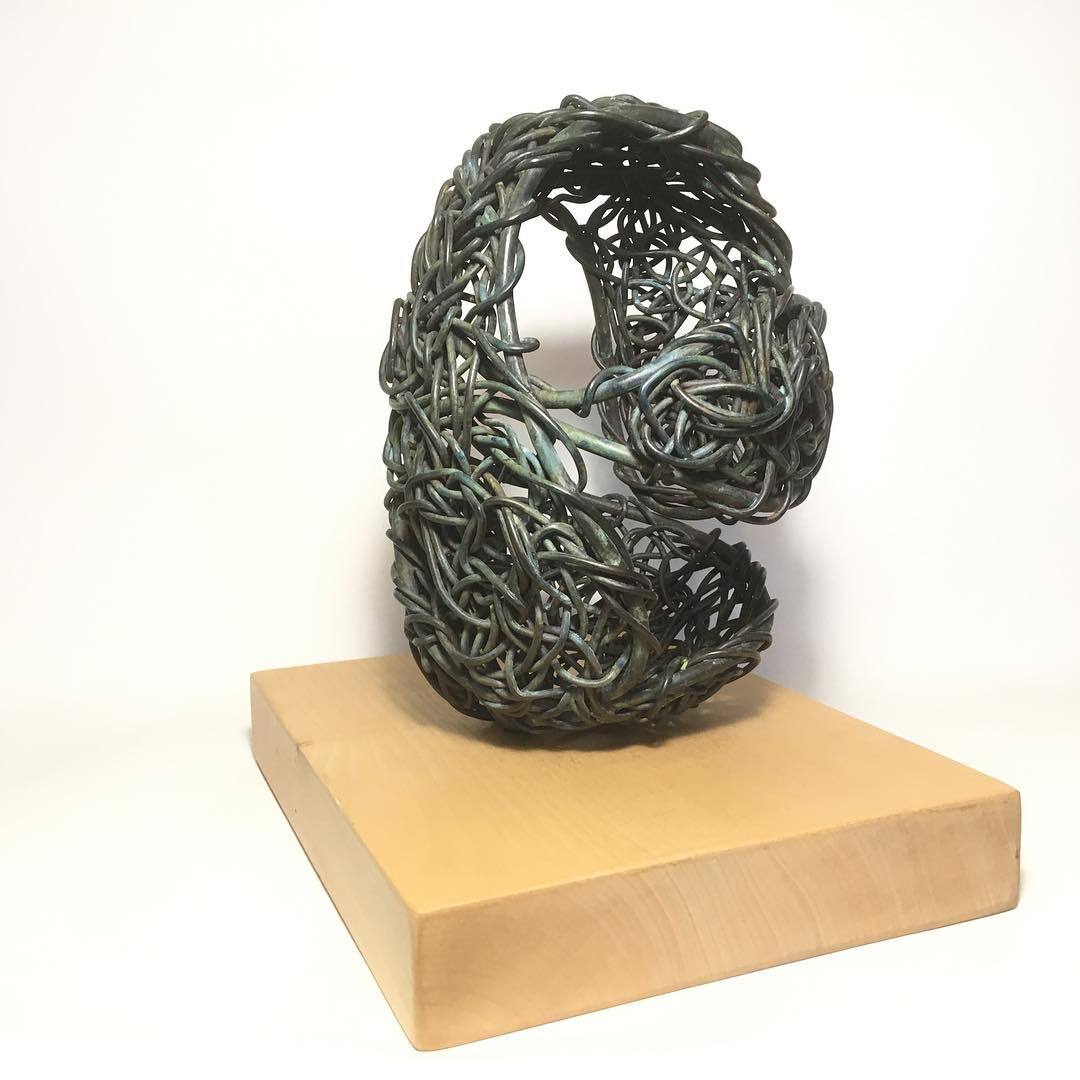
Textured Bronzes and Crocheted Bronze sculptures ready for next weeks Art Fair East exhibition, I’ll be taking along these two collections plus a few more too #sculpture #artfaireastnorwich #artfaireast #Art #bronzesculptures
https://www.instagram.com/p/Bqie-K0g-av/?utm_source=ig_tumblr_share&igshid=1uf8e7x6dg6im
Hawkers and the Bramley’s in the 1800’s

Spirit of Mayflower: Hawkers and the Bramley’s in the 1800’s
Part of my Spirit of Mayflower project is exploring migration and family history inspired by the Mayflower story. My family history is peppered with stories of migration, albeit smaller in miles, the times and circumstances would still have caused great upheaval.
During this week I have been delving into the lives of my Gt, Gt, Gt Grandfather Thomas Bramley who was born in Leicestershire c.1848 and was later baptised at St Mary’s Church, Blidworth, Nottinghamshire. His father was a shopkeeper in Hucknall Torkard, Nottinghamshire and Thomas followed his father into the family business as life as a Hawker.
During a visit to Nottingham Archives I have found some fascinating stories about him and his family, which included moving multiple times, finding himself in the bankruptcy court in 1878, changing his entire families surname and moving them to Ilkeston, Derbyshire.
Life in Ilkeston under a false name must have been difficult, and he took up a job as a coal miner. This career change must not have been a good fit for Thomas as I find him back as a Licensed Hawker and reverting to his true name in 1891. In fact the whole family help out as hawkers, his wife Ann, son John Thomas and daughter Floria are Hawkers Assistants in the 1891 census.
After some time Thomas and wife Ann move back to Hucknall Torkard, but some of their children stay in Ilkeston carrying on with the family trade. Son John Thomas Bramley marries Elizabeth and has a son, also called John Thomas. Luckily I managed to find a picture on the local history group facebook page, showing wife Elizabeth with their son. The shop was on Nottingham Road and later moved to White Lion Square where it remained a local hardware shop up until the 1970’/80’s when the area was redeveloped.
Reading the facebook posts really helped bring this part of my family history alive, with many people remembering popping into old Mr Bramley’s shop.
Although I don’t yet know much of what became of Thomas Bramley once back in Hucknall, I did find him in Kelly’s Directory of Nottinghamshire in 1900 listed as an Earthenware Dealer.
Wife Ann received poor relief around this time, listed as ‘Infirm’ she was awarded £3 S2 D6, she later died in 1901 aged just 53 years of age.